
Tenant Contents Insurance: 7 Smart Benefits for Renters

Renting a property in Dubai involves several responsibilities. Tenants need to understand their rent, security deposit, Ejari registration, maintenance responsibilities, and insurance requirements before signing a tenancy contract.
Tenant contents insurance is one type of protection that renters may consider. It can help protect personal belongings and may also provide liability protection, depending on the policy.
But is it legally required? Does Ejari automatically require it? Can a landlord ask for proof of insurance? The answer depends on the terms of your tenancy agreement and the type of insurance involved.
Is contents insurance mandatory for tenants in Dubai?
Personal contents insurance is not automatically required for every residential tenant in Dubai simply because the tenancy is registered through Ejari.
The Dubai Land Department provides a unified tenancy contract for Ejari registration. The standard registration requirements do not list personal contents insurance as a document that every tenant must provide.
However, individual tenancy agreements can include additional conditions. The unified tenancy contract allows special conditions to be added by the parties.
This means tenants should always read their rental agreement carefully. If the landlord includes an insurance requirement, the tenant should understand what type of cover is required before signing.
For many renters, tenant contents insurance can still be useful even when it is not a specific requirement.
Does my Ejari contract require insurance?
Ejari is the system used to register tenancy contracts in Dubai. It records key information about the rental arrangement, including the property, rent, tenancy period, landlord, and tenant.
The standard Ejari contract does not mean that every tenant has identical insurance obligations. Your individual agreement may include additional terms.
Check your contract for references to:
- Insurance
- Personal belongings
- Property damage
- Third-party liability
- Accidental damage
- Proof of insurance
- Minimum coverage limits
A tenancy contract insurance clause may state whether insurance is required and what conditions the tenant must follow.
If the wording is unclear, ask your landlord or property manager for an explanation before signing the agreement.
What does renters insurance cover in the UAE?
Renters insurance UAE policies can provide different types of protection depending on the insurer and policy selected.
A policy may cover some of the following:
- Furniture and household items
- Electronics and appliances
- Clothing and personal belongings
- Theft where included
- Certain accidental losses
- Temporary accommodation after an insured event
- Personal liability
- Accidental damage where specifically covered
The actual protection depends on the policy wording. Limits, exclusions, deductibles, and conditions can affect whether a claim is covered.
Tenants should also check whether expensive items such as jewellery, laptops, cameras, or specialist equipment have individual limits.
Creating a basic inventory of your belongings can make it easier to understand how much cover you may need.
What is liability coverage in a Dubai rental?
Liability coverage in Dubai rental policies can provide protection when a tenant becomes legally responsible for certain covered injury or property damage.
For example, an accident inside a rented property could potentially cause damage to another part of the building. If the incident is covered by the policy, liability protection may help with eligible costs.
Liability cover and contents cover are different.
Contents cover generally relates to the tenant’s belongings. Liability cover relates to certain claims involving other people or property.
When reviewing a policy, check:
- Liability limit
- Covered incidents
- Exclusions
- Deductible or excess
- Accidental damage conditions
- Legal expenses, if included
The exact protection varies between insurers, so tenants should read the policy documents before purchasing cover.
Can a landlord ask for proof of insurance in Dubai?
A landlord can include insurance requirements in a tenancy agreement. If the signed contract requires the tenant to maintain insurance, the tenant should follow the agreed condition.
A tenancy contract insurance clause may specify the type of insurance required, minimum coverage amount, policy period, or deadline for providing proof.
If a landlord asks for proof of insurance, check the signed agreement first. If insurance is required, the tenant may need to provide a certificate or other evidence from the insurer.
It is useful to keep copies of the tenancy agreement, insurance certificate, payment records, and related communication.
Is insurance the same as a security deposit?
No. Insurance and a security deposit serve different purposes.
A security deposit is paid to the landlord according to the terms of the tenancy agreement. It can be used in accordance with applicable rental rules and the condition of the property.
Insurance is different because it is provided by an insurance company under a separate policy.
The Ejari tenancy contract includes a section for the security deposit. This does not mean that the deposit replaces insurance.
Likewise, having renters insurance in the UAE does not remove a tenant’s responsibilities under the rental agreement.
Why might tenants consider contents insurance?
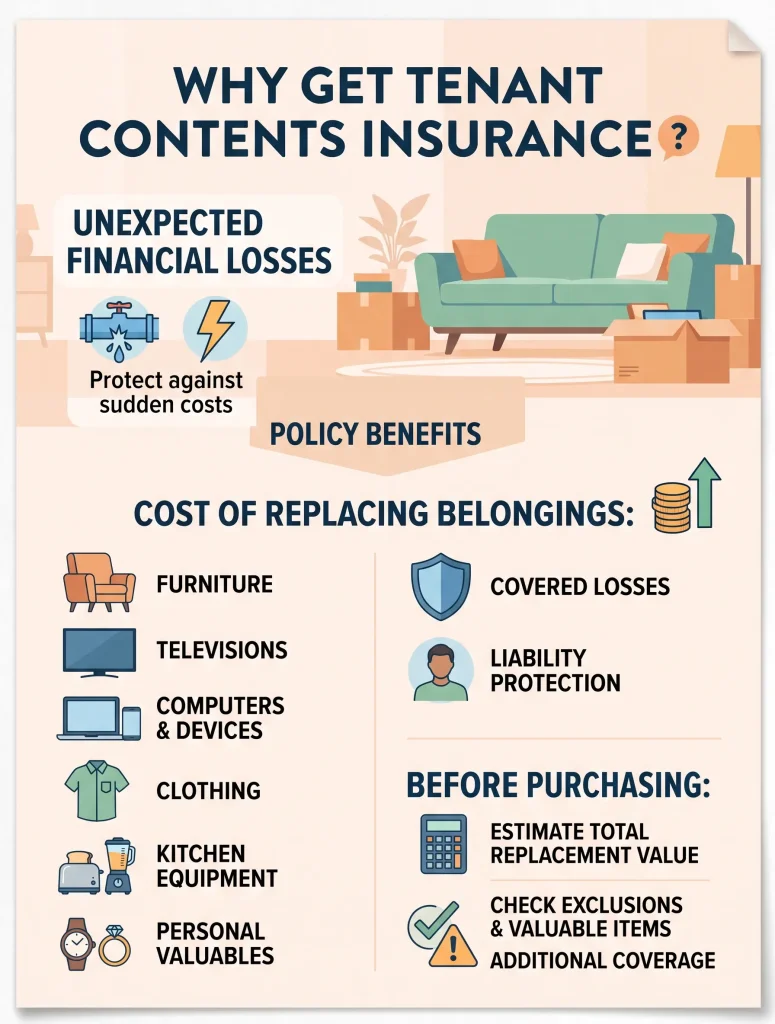
Even when insurance is not required, some tenants may choose it to protect against unexpected financial losses.
Think about the cost of replacing:
- Furniture
- Televisions
- Computers and mobile devices
- Clothing
- Kitchen equipment
- Personal valuables
Tenant contents insurance may provide protection for covered losses according to the policy terms. Some policies may also include liability protection.
Before purchasing a policy, estimate the total replacement value of your belongings. This can help you select an appropriate coverage limit.
Tenants should also check exclusions and understand whether certain valuable items need additional cover.
What should you check before signing your lease?
Before signing a Dubai tenancy agreement, review the complete document and any additional conditions.
Use this checklist:
- Read the entire tenancy agreement
- Review the special conditions
- Look for insurance requirements
- Check whether contents cover is required
- Check whether liability cover is required
- Confirm the required coverage amount
- Check when proof must be provided
- Ask questions about unclear terms
- Keep a copy of the signed agreement
If you find an insurance requirement, make sure you understand what you are agreeing to.
What if my landlord says insurance is required?
Ask the landlord or property manager to show you the relevant section of the tenancy contract.
If the agreement requires insurance, check the type and amount of cover needed. The policy should meet the conditions stated in the contract.
If you are unsure about the legal meaning of a specific clause, consider getting advice from a qualified UAE property or legal professional.
Important points for Dubai tenants
The main points are straightforward:
- Personal contents insurance is not automatically required for every tenant.
- Ejari registration and insurance serve different purposes.
- A rental contract may contain additional insurance conditions.
- Contents insurance can protect personal belongings according to policy terms.
- Liability protection may cover certain claims involving injury or property damage.
- Tenants should review their contract before signing.
- Insurance policies should be checked for exclusions and coverage limits.
For liability coverage in Dubai rentals, always review the policy wording carefully rather than relying only on general descriptions.
Conclusion
Tenant contents insurance is not automatically mandatory for every tenant in Dubai. However, individual tenancy agreements may contain insurance requirements, so tenants should carefully review their contracts before signing.
Ejari registration does not automatically provide personal insurance protection. Insurance is a separate arrangement that can protect belongings or provide liability cover according to the policy terms.
Understanding your tenancy contract can help you avoid confusion about your responsibilities as a tenant.
If you need help with Ejari registration, tenancy contracts, or other Dubai rental requirements, contact the team at Ejari. Call the team at Ejari for practical guidance and assistance with your tenancy process.
FAQs
Does contents insurance cover damage caused by a tenant?
It depends on the policy. Some policies include accidental damage, while others may exclude certain types of damage. Always check the policy wording before purchasing cover.
Does insurance cover belongings outside my rented home?
Some policies may provide limited protection for belongings outside the home, but this varies between insurers. Check the geographical and situation-based limits in your policy.
Do tenants need insurance for furnished apartments?
Not necessarily. The requirement depends on the tenancy agreement. If the apartment is furnished, tenants should also check who is responsible for the landlord’s furniture.
Can my insurance policy expire during my tenancy?
Yes, an insurance policy can have a defined period. If your contract requires continuous insurance, make sure your policy remains active for the required period.
Can I choose any insurance provider if my lease requires insurance?
This depends on the wording of your tenancy agreement. Check whether the contract specifies a provider, minimum coverage, or particular policy conditions before purchasing insurance.