
Who Pays Chiller Charges: 5 Essential Facts for Renters

Summer in Dubai can turn a small cooling bill into a big surprise. A tenant moves in, switches on the air conditioning, and receives a separate invoice that was never discussed. The landlord says it belongs to the tenant, and the tenant thinks it was part of the rent. If you have ever wondered who pays chiller charges, you are not alone, because the answer depends on your contract more than on a fixed rule.
This guide explains district cooling tenant-landlord responsibilities in Dubai in simple words. You will learn how the bills work, what chiller-free means, and how to avoid disputes. The information is general, so please check your own tenancy documents and confirm details with the building or cooling provider.
What Are Chiller Charges?
Many Dubai buildings use a central or district cooling system instead of separate air conditioning units. The cooling is produced in a central plant and sent to each unit as chilled water.
Chiller fees Dubai apartment residents pay usually include:
- A consumption charge based on how much cooling you use
- A fixed capacity charge for the cooling capacity reserved for your unit
- Meter charges and connection or deposit amounts
- VAT on some of these items
The fixed capacity charge is billed even when the unit is empty, or the AC is off. This is why chiller costs can be a large part of the yearly housing budget.
Are Chiller Charges Included in the Rent?
Sometimes yes, sometimes no. A unit advertised as chiller-free means the landlord absorbs the cooling cost. The tenant does not receive a separate cooling bill, but still pays DEWA electricity and water.
Here is the simple difference:
- Chiller-free: Cooling is included in the rent, so the tenant has more predictable costs
- Chiller paid: The tenant receives a separate cooling bill each month
- Mixed arrangement: The contract splits the charges between both sides
Chiller-free units often have a higher rent, because the landlord builds the cooling cost into the price. This is why it helps to compare rent plus all other bills, not rent alone. When people ask who pays chiller charges, the first step is to check whether the unit is advertised and contracted as chiller-free.
Who Pays District Cooling Bills in a Rented Apartment?
In a chiller-paid unit, the tenant usually registers an account with the cooling provider and pays the bills. Legal commentary notes that this normally includes both the consumption charge and the fixed capacity charge. However, the split is a matter of contract, not a rule that fits every lease.
Common patterns include:
- The tenant pays all district cooling charges
- The landlord pays the fixed capacity charge, and the tenant pays consumption
- The landlord pays everything, as in a chiller-free lease
Some commentators say the landlord is technically responsible for certain fixed charges because they continue when the unit is vacant. Others say the tenant pays whatever the contract states. Because opinions differ, the safest approach is to follow the written contract. A clear district cooling tenant-landlord Dubai clause protects both sides.
What If the Building Has No Individual Cooling Meters?
Some buildings use a central chiller system, and not every unit has its own meter. In these cases, the cost may be included in the electricity bill, included in the building service charges, or shared by another method set by the building.
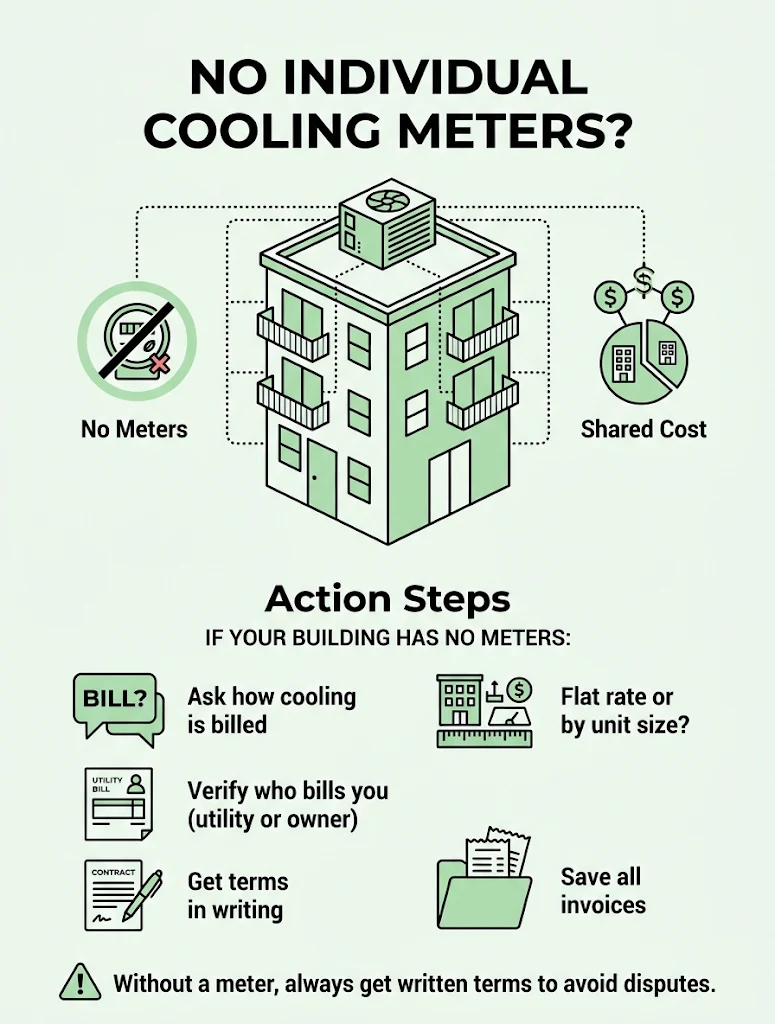
If your building has no individual meters:
- Ask the building management how cooling is billed
- Ask whether the cost is a fixed monthly amount or based on unit size
- Confirm whether it appears on your utility bill or comes from the owner
- Get the method in writing before you sign
- Keep every invoice if the landlord asks you to pay a share
When there is no meter, the risk of confusion is higher. Without clear wording, a tenant may be charged a guess, not a real use. Writing down who pays chiller charges in an unmetered building is especially important.
Can the Charges Be Shared Between Landlord and Tenant?
Yes. Nothing stops the parties from sharing the cost. This is common when a landlord wants a higher rent, but the tenant wants lower monthly bills.
Practical options:
- The landlord covers the fixed capacity charge, and the tenant pays usage
- The landlord offers a chiller-free lease at a higher rent
- The parties agree on a fixed monthly cooling amount
- The tenant pays all charges, but the rent is reduced
The key is clarity. Agreements about chiller fees that Dubai apartment tenants sometimes make by chat or by phone carry little weight if there is a dispute. A written term is much safer than a promise from an agent.
Should Cooling Charges Be Specified in the Tenancy Agreement?
Yes, absolutely. Legal experts say the allocation of these charges is a matter of contract. The registered tenancy contract is the binding document, so the AC charges rental agreement wording should be specific.
A good clause should say:
- Whether the unit uses district cooling or building chillers
- Whether the unit is chiller-free or chiller-paid
- Who pays the consumption charge
- Who pays the capacity charge and any meter or connection charge
- Who pays the chiller deposit and who receives the refund
- What happens if the provider changes its rates
Example in plain words: the tenant will pay the metered consumption charge, and the landlord will pay the fixed capacity charge. Adapt this to your own deal. The AC charges rental agreement should name each charge, not just say that cooling is included.
Why Air Conditioning Bills Cause Disputes
Air conditioning bill tenancy disputes often start for simple reasons:
- The ad said chiller free, but the contract is silent
- The tenant did not know about the fixed capacity charge
- The previous tenant left an unpaid balance
- The landlord changes the amount after move-in
- The deposit was not refunded after move-out
To avoid these, ask for the last few bills for the unit, check for old dues before activation, and keep receipts. A small check before signing can save a lot of money later.
Common Mistakes to Avoid
- Believing that chiller free means all bills are free
- Skipping the question of the fixed capacity charge
- Not checking whether the account is in the right name
- Forgetting the deposit and the final bill at move-out
- Relying on a verbal promise from an agent
Quick Checklist for Tenants and Landlords
- Confirm the cooling type for the building
- Decide who pays each cooling charge
- Write the split into the contract or addendum
- Ask about old bills and deposits before activation
- Keep copies of every invoice and receipt
- Review air conditioning bills and tenancy terms again at renewal
- Check the AC charges rental agreement wording before you sign
Conclusion
The question of who pays chiller charges has no single answer for every rental. Chiller-free units place the cost on the landlord, chiller-paid units usually place it on the tenant, and mixed deals split it. What matters most is a clear written clause. Check how your building bills cooling, ask for past bills, and agree on each charge before signing. Clear district cooling tenant landlord Dubai terms and clear chiller fees Dubai apartment terms protect everyone from surprise bills.
Need help reviewing your tenancy terms? Contact the team at Ejari today. Our experts can review your contract, explain who pays what, and guide you through Ejari registration. Reach out now so your cooling costs are clear from day one.
Frequently Asked Questions
Are chiller charges included in the rent?
Only if the unit is chiller-free or the contract says so. In a chiller-paid unit, the cooling bill is separate from rent and from DEWA.
Who pays district cooling bills in a rented apartment?
Usually the tenant, who registers with the provider. But the contract can shift part of the cost, such as the fixed capacity charge, to the landlord.
What if the building does not have individual cooling meters?
The cost may be included in the electricity bill, in building service charges, or shared by a method set by the building. Ask the building management and get the method in writing.
Should cooling charges be specified in the tenancy agreement?
Yes. The registered contract is the binding document, so a clear AC charges rental agreement clause should name who pays each charge and what happens to deposits.
Does a chiller-free unit mean I pay nothing for cooling?
You do not receive a cooling bill from the provider, but the cost is usually built into the rent. You still pay your DEWA electricity and water.