
Ejari Mistakes to Avoid When Registering Your Lease

Registering a tenancy contract through Ejari is a mandatory step for tenants and landlords in Dubai. While the process is generally straightforward, even minor errors can result in delays, application rejections, or complications when accessing essential services such as DEWA activation and visa-related procedures.
Many applicants encounter avoidable issues because of incomplete paperwork, inaccurate information, or misunderstandings about the registration requirements. Understanding the most common Ejari mistakes Dubai residents make can help ensure a smoother registration experience and reduce the risk of unnecessary delays.
This guide explores the most frequent Ejari registration errors, the reasons applications are rejected, and the steps you can take to avoid them.
Why Avoiding Ejari Registration Errors Matters
An approved Ejari certificate serves as an official record of your tenancy agreement and is often required for various government and utility services.
When mistakes occur during registration, applicants may experience:
- Delayed approval
- Rejected applications
- Additional administrative costs
- Multiple visits to service centres
- Delays in DEWA activation
- Difficulties with visa-related procedures
By understanding common mistakes in advance, tenants and landlords can save time and avoid unnecessary complications.
The Most Common Ejari Mistakes Dubai Residents Make
Many registration issues stem from simple oversights that can easily be prevented with proper preparation.
1. Submitting Incomplete Documentation
One of the leading causes of Ejari registration errors is missing documentation.
Applicants sometimes forget to include:
- Emirates ID copies
- Passport copies
- Residence visa documents
- Tenancy contracts
- Property ownership documents
- Landlord identification records
Missing even a single required document may delay processing.
2. Using Expired Identification Documents
Expired Emirates IDs, passports, or residency documents can result in application rejection.
Before submission, verify that all identification documents remain valid and legible.
3. Incorrect Property Information
Property details must match official records and tenancy documentation.
Common errors include:
- Incorrect unit numbers
- Wrong building names
- Address discrepancies
- Mismatched property details
Accurate property information is essential for successful registration.
4. Missing Signatures
A tenancy contract without the required signatures may not be accepted during registration.
Applicants should ensure:
- Tenant signatures are present.
- Landlord signatures are included.
- All contract pages are properly executed where required.
5. Unclear or Low-Quality Document Copies
Blurry scans and unreadable photocopies are among the most common Ejari document errors.
Documents should be:
- Clear
- Complete
- Properly scanned
- Easy to read
Providing high-quality copies helps prevent unnecessary verification delays.
Understanding Common Ejari Rejection Reasons
Many applicants are surprised when their registration request is rejected. However, most Ejari rejection reasons are related to documentation or data inconsistencies.
Some of the most frequent causes include:
- Missing documents
- Invalid identification
- Inaccurate property details
- Incomplete tenancy agreements
- Ownership verification issues
- Data mismatches between records
Careful review before submission can significantly reduce the likelihood of rejection.
The following visual highlights the most common reasons why Ejari applications are delayed or rejected.
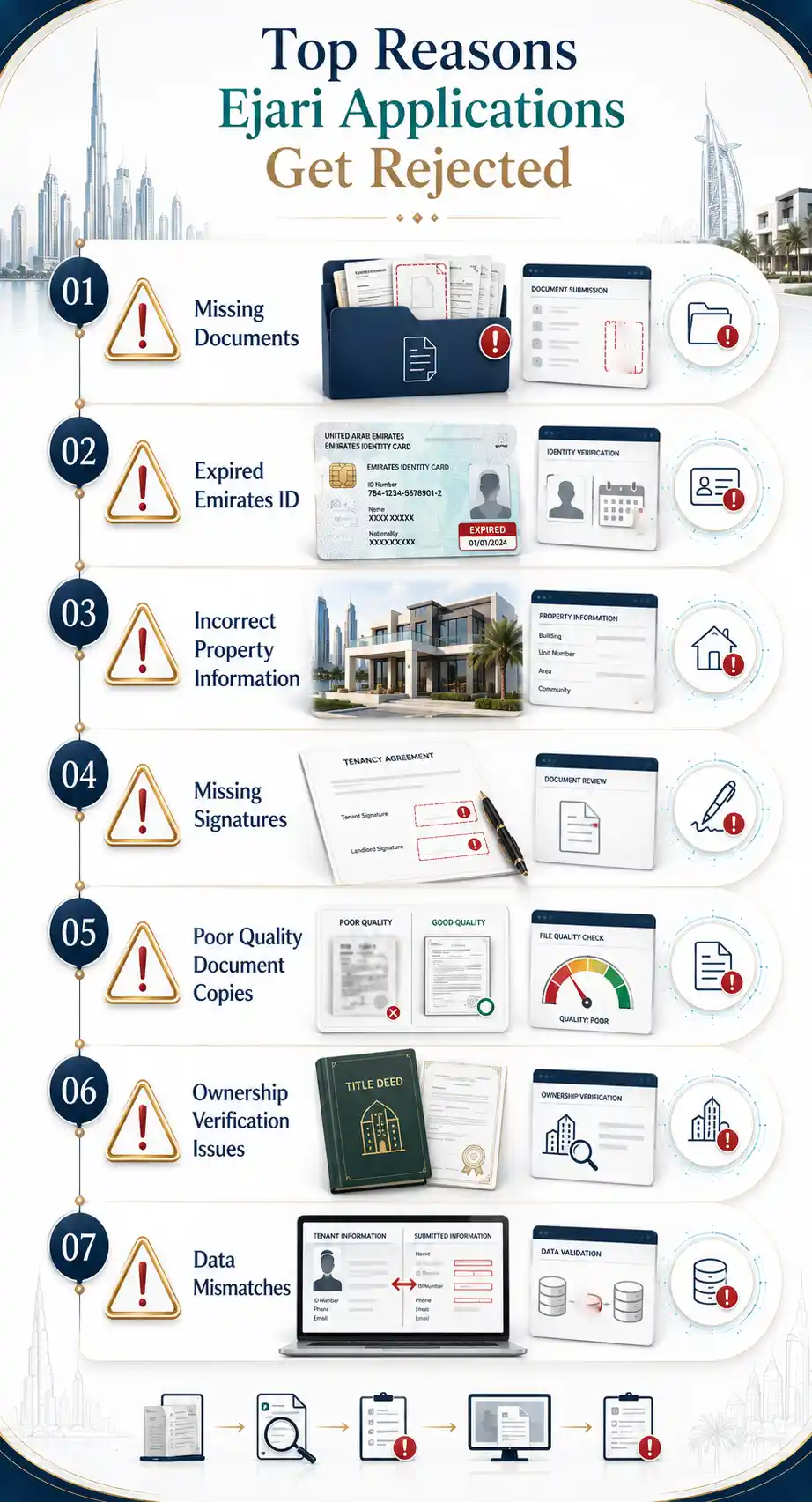
Being aware of these issues beforehand allows applicants to prepare more accurate and complete submissions.
Ejari Document Errors That Frequently Cause Delays
Documentation issues account for a large percentage of registration problems.
Missing Pages
Applicants occasionally submit incomplete tenancy contracts that omit important pages or attachments.
Mismatched Names
Names appearing on:
- Emirates IDs
- Passports
- Tenancy agreements
must be consistent across all submitted documents.
Incorrect Ownership Records
Landlord information must align with official property ownership records.
Outdated Supporting Documents
Old or expired supporting documents can trigger additional verification requirements.
Unverified Authorization Documents
Where representatives act on behalf of tenants or landlords, authorization documents may be required.
Failure to provide proper authorization can delay processing.
How to Prevent Ejari Registration Errors
Fortunately, most registration issues can be avoided through proper preparation.
Review Documents Before Submission
Create a checklist and confirm that all required documents are available.
Verify Personal Information
Double-check:
- Names
- Identification numbers
- Contact details
- Property information
Confirm Tenancy Contract Accuracy
Ensure the contract contains:
- Correct rental amount
- Accurate tenancy dates
- Property details
- Required signatures
Use Clear Document Copies
Always submit high-quality scans or photocopies.
Keep Supporting Records Available
Having additional supporting documentation ready can help resolve verification questions quickly.
Many of the most common registration mistakes can be avoided by understanding the complete Ejari process before submitting your application. Our guide, Ejari Registration Breakdown: Essential Steps, walks tenants and landlords through every stage of the registration process, from preparing the required documents to receiving the Ejari certificate. Following the correct registration steps can help reduce errors, prevent application rejections, and ensure a smoother tenancy registration experience.
Mistakes Made by First-Time Tenants
First-time tenants are particularly vulnerable to registration mistakes because they may be unfamiliar with Dubai’s tenancy procedures.
Common first-time tenant mistakes include:
- Assuming registration is automatic
- Delaying the registration process
- Not verifying landlord information
- Failing to review the tenancy contract carefully
- Ignoring document requirements
Understanding the process beforehand can help new residents avoid unnecessary stress.
Common Mistakes Made by Landlords
Landlords can also contribute to registration delays.
Examples include:
- Providing outdated ownership records
- Delaying document submission
- Failing to sign contracts properly
- Supplying incorrect property details
- Missing supporting documentation
Effective communication between landlords and tenants can help prevent many of these issues.
Use this registration checklist to verify that your application is complete before submitting it for approval.
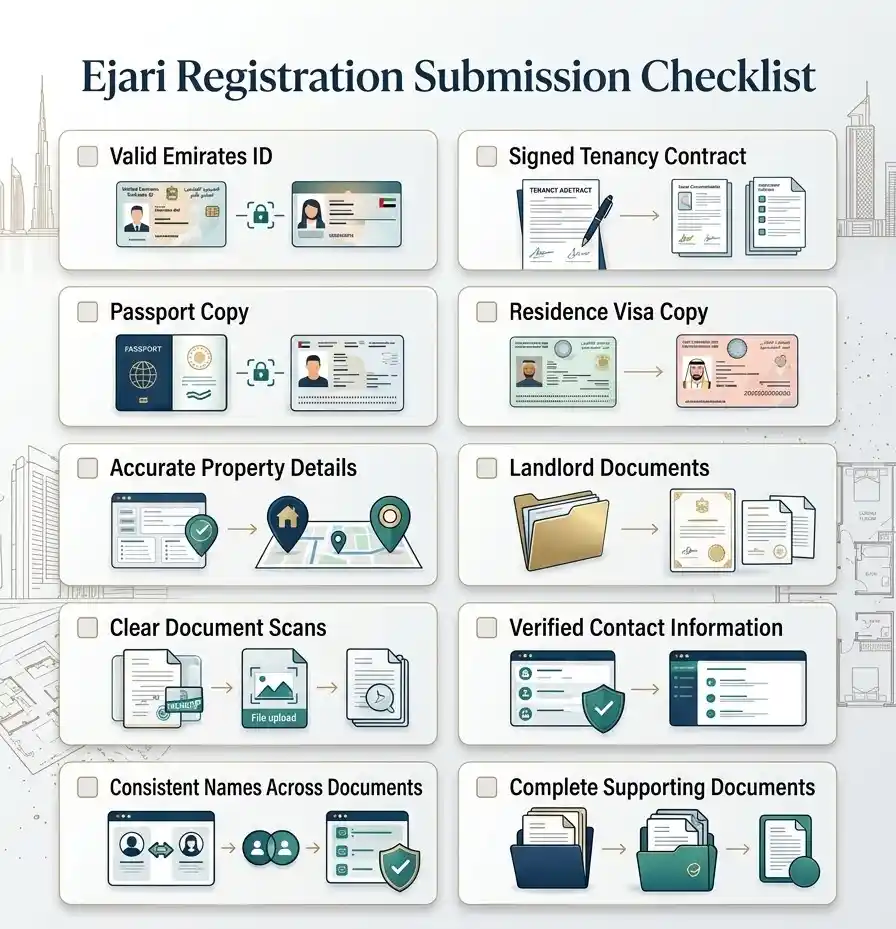
A few minutes spent reviewing your application can help prevent costly delays and repeated submissions.
What to Do If Your Ejari Application Is Rejected
If your application is rejected, the first step is identifying the reason provided during the review process.
Applicants should:
- Review the rejection notice carefully.
- Correct any inaccurate information.
- Replace missing documents.
- Update expired identification.
- Resubmit the application with complete documentation.
Most issues can be resolved once the required corrections have been made.
Benefits of Professional Registration Assistance
Many tenants and landlords choose professional assistance to reduce the risk of registration issues.
Professional support can help with:
- Document verification
- Application preparation
- Information review
- Error prevention
- Registration guidance
This can be especially beneficial for first-time tenants and complex tenancy arrangements.
How Ejari Support Can Help
Ejari Support assists applicants throughout the registration process by helping identify potential issues before submission.
Services include:
- New Ejari registration
- Ejari renewals
- Document verification
- Registration guidance
- DEWA-related support
- Tenancy administration assistance
Professional support helps reduce the likelihood of errors while improving processing efficiency.
Conclusion
Avoiding common Ejari mistakes Dubai tenants and landlords frequently make can save significant time and effort during the registration process. Most Ejari registration errors occur because of missing documents, inaccurate information, poor-quality copies, or incomplete tenancy agreements.
Understanding common Ejari rejection reasons and preventing Ejari document errors before submission can help ensure a smoother experience and faster approval. By carefully reviewing all documents, verifying information, and preparing thoroughly, applicants can complete their registration with confidence and avoid unnecessary delays.
FAQs
What are the most common Ejari registration errors?
Missing documents, incorrect property information, expired identification, and incomplete tenancy contracts are among the most common registration errors.
Why do Ejari applications get rejected?
Most Ejari rejection reasons involve documentation issues, information mismatches, or incomplete applications.
Can unclear document scans cause delays?
Yes. Poor-quality copies and unreadable scans are common causes of processing delays.
How can I avoid Ejari document errors?
Review all documents carefully, verify information accuracy, and submit clear copies of all required paperwork.
Should I seek professional assistance for Ejari registration?
Professional support can help identify potential issues before submission and reduce the likelihood of delays or rejections.