
Dubai Housing Fee Tenant Landlord Charges: 5 Proven Facts

Rent is only the starting point. A few weeks after moving in, many tenants notice extra lines on their monthly bills. Some owners also send extra requests for building costs. This leaves a common question: which costs are fair, and which belong to someone else? Understanding Dubai housing fee tenant landlord charges can save you money and stop arguments before they start.
This guide explains the main tenant property charges UAE renters face, which costs are usually the owner’s responsibility, and how to handle gaps in the contract. The information is general, so please check your own tenancy contract and confirm current rules with official channels.
What Is the Dubai Municipality Housing Fee?
The housing fee is a municipal charge linked to residential property in Dubai. It is set at the Dubai Municipality housing fee rate of 5 percent of the annual rent. It is not an owner tax on the property value. Instead, it is an occupancy charge linked to the registered rent.
Key points:
- It is calculated as 5 percent of the annual rent
- It is divided into 12 equal monthly amounts
- It follows the Ejari registered rent
- It applies to all residential units, such as apartments, villas, and townhouses
- Guides note that it applies to expatriates, while UAE nationals living in their own homes are described as exempt
For example, if the annual rent is AED 80,000, the yearly fee is AED 4,000. That is about AED 333 per month.
Who Pays: Tenant or Landlord?
In most rentals, the tenant pays the housing fee. It is tied to the person living in the unit, and it is collected from the occupant through the utility bill. This is the main item in most Dubai housing fee tenant-landlord charge conversations.
However, the contract still matters. One long-running legal answer says there is no hard rule that forces one side to pay in every case, so the parties can negotiate and write it down. A landlord who wishes to cover it can agree, but this should be written in the contract.
A simple rule of thumb:
- Housing fee: usually the tenant
- Building service charges: usually the owner
- Utilities: usually the tenant
- Repairs: usually the landlord, unless the contract says otherwise
What Are Building Service Charges?
Service charges pay for the upkeep of the building and shared areas. These include security, cleaning, lifts, landscaping, pools, and gyms. In Dubai, RERA regulates them, and the owners’ association or developer charges them.
According to industry guides, owners pay these, not tenants. Typical amounts vary widely by development, from a few dirhams to around AED 30 per square foot per year. A tenant who is asked to pay these in addition to rent should check the contract first.
Why the owner pays:
- The owner holds the title and benefits from the building value
- The charge relates to the property, not to daily use by the occupant
- Tenants already pay rent, which is meant to include this cost
So landlord service charges Dubai owners face are normally not the tenant’s problem.
Can a Landlord Pass Property Service Charges on to a Tenant?
Sometimes landlords try. Some guides warn that landlords may pass on maintenance fees charged by developers, especially in private deals and short-term lets. This does not mean it is automatic or always valid.
What to remember:
- If the contract does not mention it, tenants should be cautious about agreeing
- Any passed-on charge should be written clearly, with the amount and period
- Repair costs are generally the landlord’s duty under the tenancy rules, unless the contract says otherwise
- Chiller charges depend on the contract, and some guides say the landlord is typically responsible when cooling is included in the rent
- Ask for supporting invoices before paying any extra amount
Where there is a disagreement, the Rental Dispute Centre is the legal route. A friendly and written request for clarity is the better first step.
How the Housing Fee Appears on the DEWA Bill
The housing fee on DEWA bill statements is easy to spot once you know where to look. Your monthly bill lists electricity, water, sewerage, and the municipality fee. There is no separate payment because it is collected together with the utility charges.
Important details:
- The fee is linked to the registered rent
- If the rent changes after renewal, the fee needs to be updated
- A mismatch between the Ejari rent and the DEWA record can cause incorrect billing
- Tenants should check the line item after every renewal
- Keep copies of the contract and Ejari certificate in case you need to request a correction
It is also a good habit to check the housing fee on DEWA bill amounts during the first month, so any mistake is found early.
Is the Housing Fee the Same as VAT?
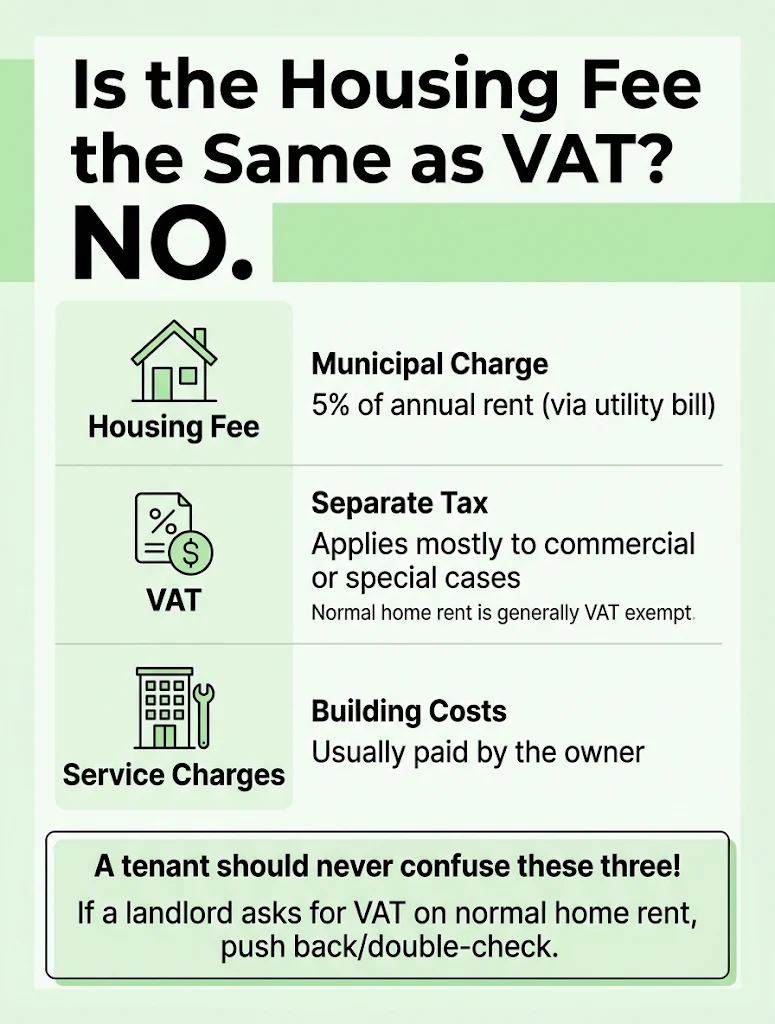
No. The housing fee is a municipal charge based on rent. VAT is a separate tax. Residential rent is generally exempt from VAT, which means a normal home rental does not carry VAT on the rent. VAT may apply in special cases, such as commercial property or hotel apartments.
Simple way to remember:
- Housing fee: Municipal, 5 percent of annual rent, paid through the utility bill
- VAT: A tax that mostly applies to commercial or special cases
- Service charges: Building costs, usually paid by the owner
A tenant should never confuse these three. If a landlord asks for VAT on a normal home rent, ask for a clear explanation and a tax invoice.
Other Costs Tenants Often See
Besides the housing fee, tenants commonly pay:
- Security deposit
- Agency commission, if applicable
- Ejari registration fee, depending on the agreement
- DEWA deposit and activation charges
- Monthly utilities
- Cooling or chiller charges, depending on the contract
- Small maintenance costs as agreed
These are separate from the building service charges. If something is unclear, ask for a written breakdown before signing.
Common Mistakes to Avoid
- Assuming the owner pays the housing fee
- Paying a service charge request without checking the contract
- Not checking the DEWA bill after renewal
- Treating the housing fee as VAT
- Agreeing to extra charges by chat only
Quick Checklist for Tenants
- Read the contract for fees, maintenance, and chiller terms
- Ask who pays service charges before signing
- Confirm that rent on Ejari matches the real rent
- Review the first DEWA bill carefully
- Keep receipts and written agreements
- Review your tenant property charges UAE list at every renewal
- Ask the Ejari team if something looks wrong
Conclusion
Dubai housing fee tenant landlord charges are easier to handle once you know the split. The tenant normally pays the municipality housing fee through the utility bill, while building service charges normally belong to the owner. Anything beyond that should be clearly written in the contract. Check your bills, keep your documents, and ask for clarity before agreeing to extra costs. A small amount of attention can prevent unfair charges and long arguments. Owners should also remember that landlord service charges in Dubai are best handled by clear wording, not assumptions.
Need help understanding your tenancy costs? Contact the team at Ejari today. Our experts can review your contract, explain who pays what, and guide you through Ejari registration. Reach out now so you know every cost before you sign.
Frequently Asked Questions
What is the Dubai municipality housing fee?
It is a municipal charge on residential property, set at 5 percent of the annual rent and billed in 12 monthly parts through the utility bill. In most rentals, the tenant pays it.
Is the housing fee the same as VAT?
No. The housing fee is a municipal occupancy charge, while VAT is a tax. Residential rent is generally VAT-exempt, but VAT can apply to some commercial or special cases.
Who pays building service charges?
Industry guides say service charges are the responsibility of the owner. The tenant should check the contract before agreeing to any extra payment.
Can a landlord pass property service charges on to a tenant?
A landlord can ask, and some do, but the tenant should not assume it is allowed. The charge should be clearly written in the contract, with the amount and the period, and supported by invoices.
Why is my housing fee different from what I expected?
The fee follows the registered rent. If the Ejari rent, the contract, and the utility record do not match, the bill can be wrong. Check your documents and request a correction through the proper channel.