
Dubai RERA Rules Every Tenant Must Know in 2026

Dubai’s rental market is one of the most regulated in the region, providing a structured legal framework that protects both tenants and landlords. Whether you’re renting your first apartment or renewing an existing lease, understanding the latest RERA rules is essential for making informed decisions and avoiding unnecessary disputes.
The Real Estate Regulatory Agency (RERA) establishes regulations that govern tenancy relationships, rental increases, eviction procedures, and other aspects of residential leasing. These rules help maintain transparency and fairness while supporting a stable property market.
This guide explains the most important RERA rules every tenant should understand in 2026, including mandatory Ejari registration, rent increase limits, eviction notice requirements, shared accommodation regulations, and security deposit considerations.
What Is RERA?
The Real Estate Regulatory Agency (RERA) is the regulatory arm of the Dubai Land Department (DLD) responsible for overseeing Dubai’s real estate sector.
RERA develops and enforces regulations relating to:
- Residential tenancy
- Property management
- Real estate brokerage
- Rental disputes
- Landlord and tenant responsibilities
- Property market transparency
Its objective is to create a balanced rental environment that protects the rights of both landlords and tenants.
Why Should Every Tenant Understand RERA Rules?
Understanding Dubai’s rental regulations helps tenants make informed decisions throughout their tenancy.
Knowing your rights and responsibilities can help you:
- Avoid legal misunderstandings.
- Better understand your tenancy agreement.
- Plan lease renewals with confidence.
- Respond appropriately to rent increase notices.
- Understand eviction procedures.
- Maintain compliance with tenancy regulations.
Being informed reduces uncertainty and contributes to a smoother rental experience.
1. Mandatory Ejari Registration
One of the most important RERA rules is that eligible tenancy agreements should be registered through the Ejari system.
Ejari serves as Dubai’s official tenancy registration platform and creates a legally recognized tenancy record.
A registered tenancy agreement may be required for:
- Utility activation
- Government services
- Residence-related procedures
- Property administration
- Tenancy verification
Completing Ejari registration promptly helps ensure your tenancy records remain accurate and compliant.
For official guidance on tenancy registration requirements and rental regulations, tenants can refer to the Dubai Land Department (DLD), which oversees both the Ejari system and Dubai’s real estate regulatory framework.
2. Rent Increase Limits
Rent increases are among the topics tenants ask about most frequently.
RERA regulations provide a structured framework governing when and how rental increases may apply.
Factors that may influence rent adjustments include:
- Current rental value
- Market rental index
- Existing lease terms
- Applicable regulations
Landlords cannot simply increase rent without following the required legal procedures.
Understanding these rules allows tenants to better evaluate renewal offers and discuss lease terms with confidence.
3. Eviction Notices and Required Timeframes
Another important area covered by RERA rules relates to eviction notices.
Tenants should understand:
- Circumstances in which eviction may occur.
- Applicable notice requirements.
- Required legal procedures.
- Rights during the notice period.
Following the proper legal process helps protect both landlords and tenants while reducing disputes.
4. Tenant Rights in Dubai
Tenant rights in Dubai are supported through regulations designed to create fairness within the rental market.
Some of the key protections include:
- Fair treatment during tenancy
- Transparent lease agreements
- Regulated rental increases
- Access to dispute resolution
- Proper notice procedures
- Protection against unlawful actions
Understanding these rights helps tenants navigate rental relationships more confidently.
5. Shared Accommodation and Subletting
Many residents choose to share accommodation with family members, friends, or colleagues. However, shared occupancy and subletting are not identical arrangements.
Tenants should understand:
- The difference between shared accommodation and subletting.
- Occupancy requirements within the tenancy agreement.
- The importance of landlord approval where applicable.
- Building and community regulations.
Before introducing additional occupants or entering into any subletting arrangement, tenants should carefully review their tenancy agreement.
Not every shared living arrangement follows the same rules. Understanding the differences helps tenants choose the appropriate housing arrangement while avoiding unnecessary misunderstandings.
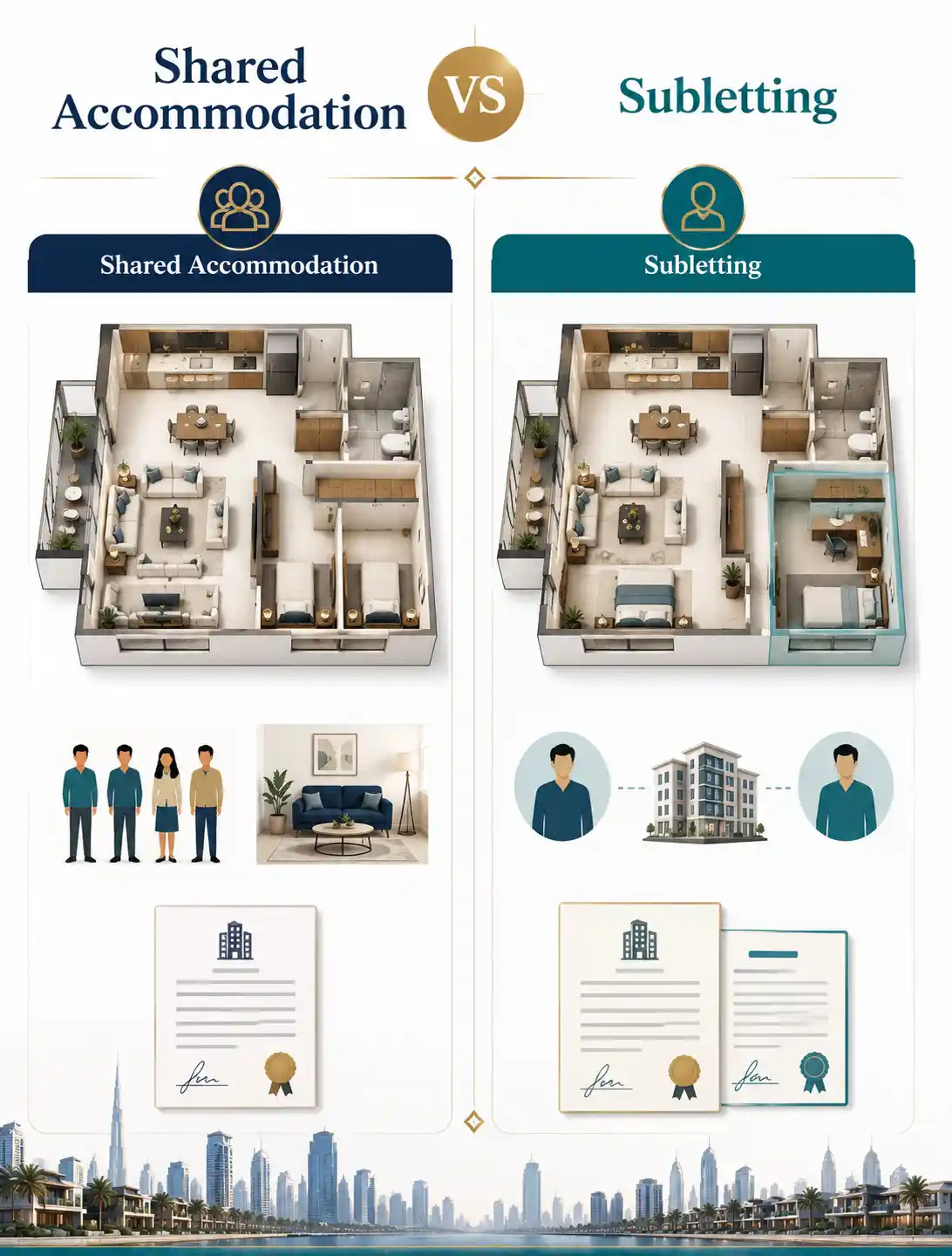
Recognising the distinction between shared accommodation and subletting helps tenants better understand their responsibilities before making changes to their living arrangements.
6. Security Deposit Protection
A security deposit is commonly collected at the beginning of a tenancy and serves as financial protection against damages beyond normal wear and tear or other obligations outlined in the tenancy agreement.
To avoid disagreements at the end of the lease, tenants should:
- Keep a copy of the tenancy agreement.
- Document the property’s condition when moving in.
- Report maintenance issues promptly.
- Understand the agreed terms regarding the deposit.
Maintaining clear records throughout the tenancy helps both parties manage the move-out process more smoothly.
7. Lease Renewals Under RERA
Renewing a tenancy agreement involves more than simply signing a new contract.
Before renewal, tenants should:
- Review the proposed rental amount.
- Confirm any updated lease terms.
- Check renewal timelines.
- Verify that all tenancy information is accurate.
- Renew Ejari after the lease is finalized.
Planning ahead helps avoid last-minute issues and ensures continuity of the tenancy.
What Is the New Rental Law in Dubai in 2026?
Many tenants search for information about the “new rental law in Dubai.”
Rather than relying on rumours or unofficial sources, tenants should follow updates issued by the relevant authorities, as regulations and procedures may evolve over time.
Staying informed through official channels helps tenants understand:
- Updated tenancy procedures
- Rental regulations
- Registration requirements
- Tenant protections
- Landlord responsibilities
Reviewing official announcements before making important tenancy decisions is always recommended.
How Long Can a Tenant Stay in a Property in Dubai as per RERA?
Another frequently asked question concerns the length of a tenancy.
The duration of occupancy depends primarily on:
- The tenancy agreement
- Lease renewal arrangements
- Compliance with applicable regulations
- Rights and obligations of both landlord and tenant
As long as both parties continue to meet their contractual and legal obligations, tenancy arrangements generally follow the agreed lease terms and the applicable rental regulations.
Common Mistakes Tenants Should Avoid
Even experienced renters occasionally overlook important tenancy requirements.
Some common mistakes include:
- Delaying Ejari registration
- Ignoring renewal deadlines
- Not reading the tenancy agreement carefully
- Assuming rent can increase without following regulations
- Failing to keep copies of important documents
- Making occupancy changes without reviewing the lease
Being proactive helps prevent unnecessary complications throughout the tenancy.
Before accepting a proposed rent increase, tenants can consult the official RERA Rental Index to better understand how rental values are assessed under Dubai’s regulatory framework.
Many tenancy disputes can be avoided by understanding a few essential responsibilities before signing or renewing a lease.
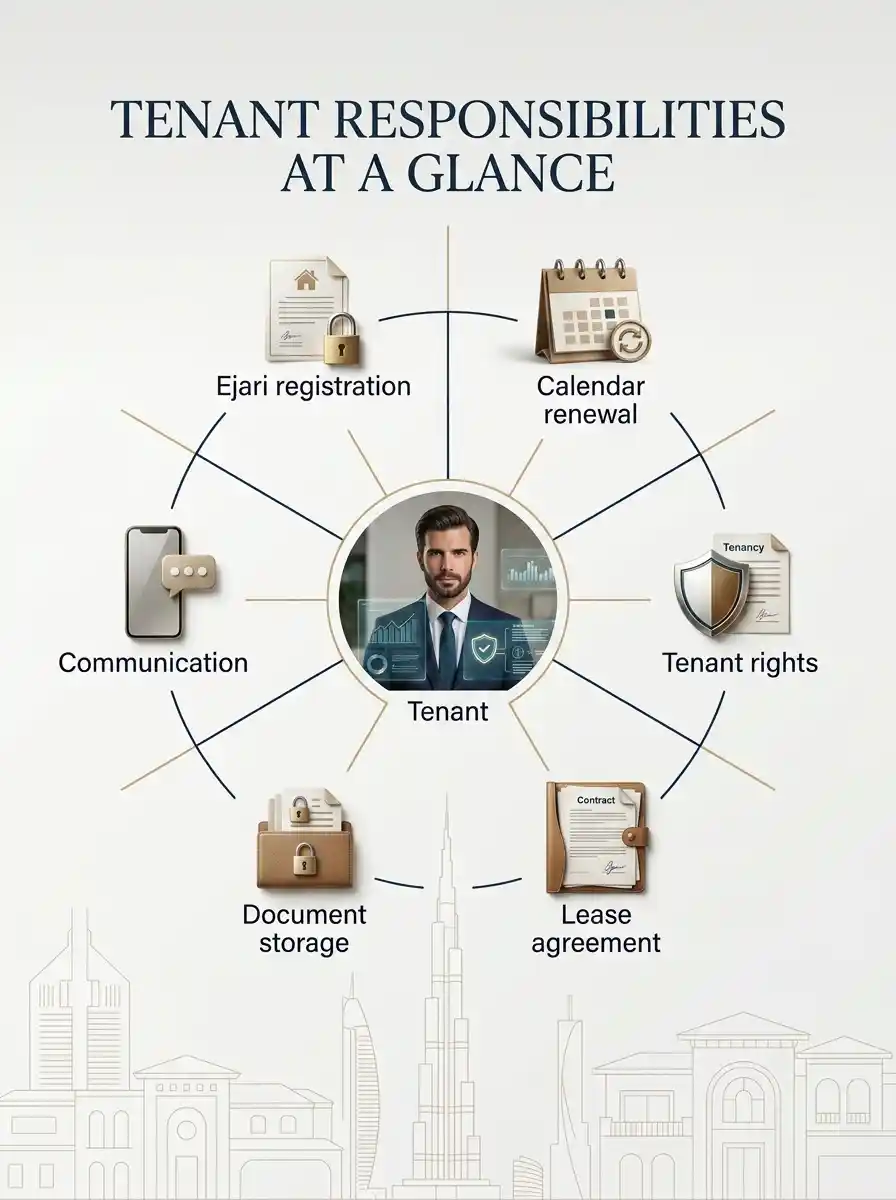
Keeping these core responsibilities in mind can help tenants enjoy a smoother rental experience while remaining compliant with Dubai’s tenancy regulations.
How Ejari Support Can Help
Understanding RERA rules is easier when you have professional guidance throughout your tenancy journey.
Ejari Support assists tenants with:
- New Ejari registration
- Ejari renewals
- Document verification
- General tenancy guidance
- DEWA-related support
- Registration assistance
Whether you are renting your first apartment or renewing an existing lease, our professional assistance can help simplify the registration process and reduce administrative delays.
Conclusion
Understanding RERA rules is an essential part of renting property in Dubai. From mandatory Ejari registration and regulated rent increases to eviction procedures, shared accommodation, and tenant rights, these regulations help create a fair and transparent rental market.
By familiarising yourself with the key rules, maintaining accurate tenancy records, and staying informed through official sources, you can better protect your interests and enjoy a smoother renting experience throughout 2026.
Frequently Asked Questions
What is RERA in Dubai?
RERA is the Real Estate Regulatory Agency, operating under the Dubai Land Department to regulate Dubai’s real estate and rental sector.
Is Ejari registration mandatory?
Eligible tenancy agreements should be registered through the official Ejari system in accordance with Dubai’s tenancy regulations.
Can a landlord increase rent at any time?
Rent increases must follow the applicable regulations and procedures rather than being applied arbitrarily.
What should I do if I receive an eviction notice?
Review the notice carefully and understand your rights and obligations under the applicable tenancy regulations before taking further action.
What is the difference between shared accommodation and subletting?
Shared accommodation generally involves approved occupants living together in the same property, while subletting usually involves renting part or all of the property to another individual under a separate arrangement.