
Arabic vs. English Ejari Contract: 5 Proven Facts to Know
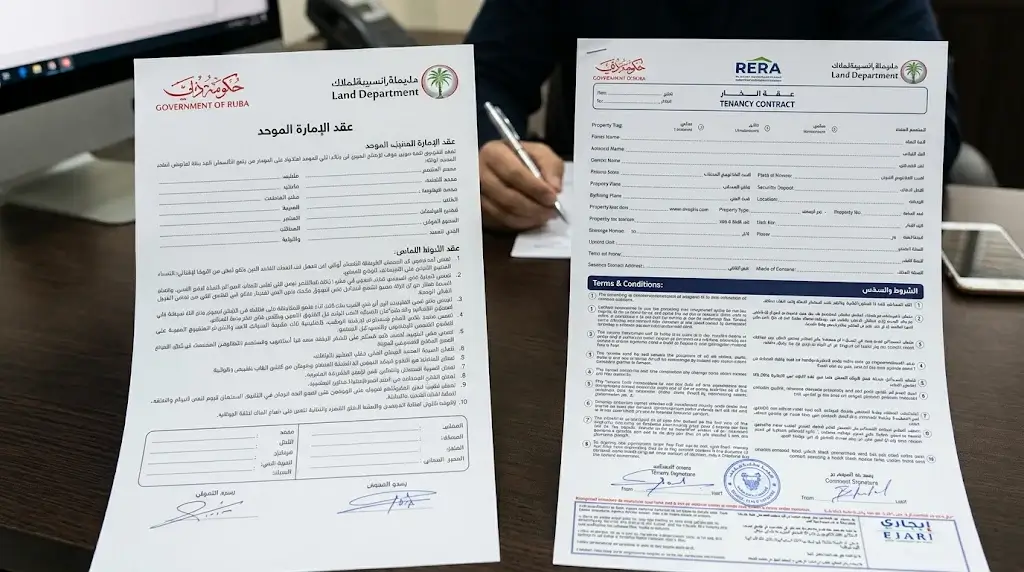
Many tenants in Dubai sign a rental contract without reading every line. Some do not read Arabic, and some do not read English well. So what happens if the two languages do not say the same thing? This is the heart of the Arabic vs. English Ejari contract question, and the answer can affect your rights if a dispute starts.
This guide explains how an Arabic tenancy contract that Dubai landlords and tenants use is structured, which version is used to interpret it, and how you can protect yourself. The information is general, so please confirm your own case with official channels before you act.
Is the Ejari Tenancy Contract Bilingual?
Yes. Dubai uses a unified tenancy contract issued by the Dubai Land Department (DLD), and it is written in both Arabic and English. The same standard form is used for residential, commercial, and industrial property. This Ejari contract language setup helps people from many countries understand the basic terms.
It helps to remember what each document does:
- The tenancy contract creates the rights and duties of both sides
- Ejari is the official registration of that contract
- The unified form is the format accepted for registration
- The same form includes space for additional terms
So in the Arabic vs. English Ejari contract debate, the starting point is simple: you are signing one bilingual document, not two separate agreements.
Which Version Takes Legal Precedence?
The Arabic text. The unified contract includes a clause saying that if there is a conflict or a difference in interpretation between the Arabic and the English wording, the Arabic text is used. In practice, the Arabic version rental agreement is treated as the reference version.
This is also supported by legal commentary. One law firm note explains that the Arabic text prevails before the rental dispute authority, even where a contract tries to say that the English text should win. So a private clause may not fix the problem for you.
Here is the short version:
- The English wording is there to help you understand
- The Arabic wording is what counts when the two differ
- A side agreement favouring English may not change this
- The safest plan is to make sure both versions match before you sign
Why This Matters in a Dispute
If a disagreement reaches the Rental Dispute Centre, the contract is read as a legal document. Documents submitted in a case must be in Arabic or legally translated into Arabic. This means the Arabic version of the rental agreement becomes the main text, even if you only ever read the English side.
Think about a simple example. The English line says the tenant must give 90 days’ notice, but the Arabic line has a different period. If this goes to a dispute, the Arabic wording is likely to be used. In the Arabic vs. English Ejari contract situation, that small difference could change who is right.
Common areas where wording differences cause trouble:
- Notice periods for renewal or ending the lease
- Rent amount and payment schedule
- Maintenance duties
- Penalties and fees
- Names, dates, and property details
What If the Wording Differs?
If you spot a mismatch, act before you sign. Fixing it early is much easier than arguing about it later.
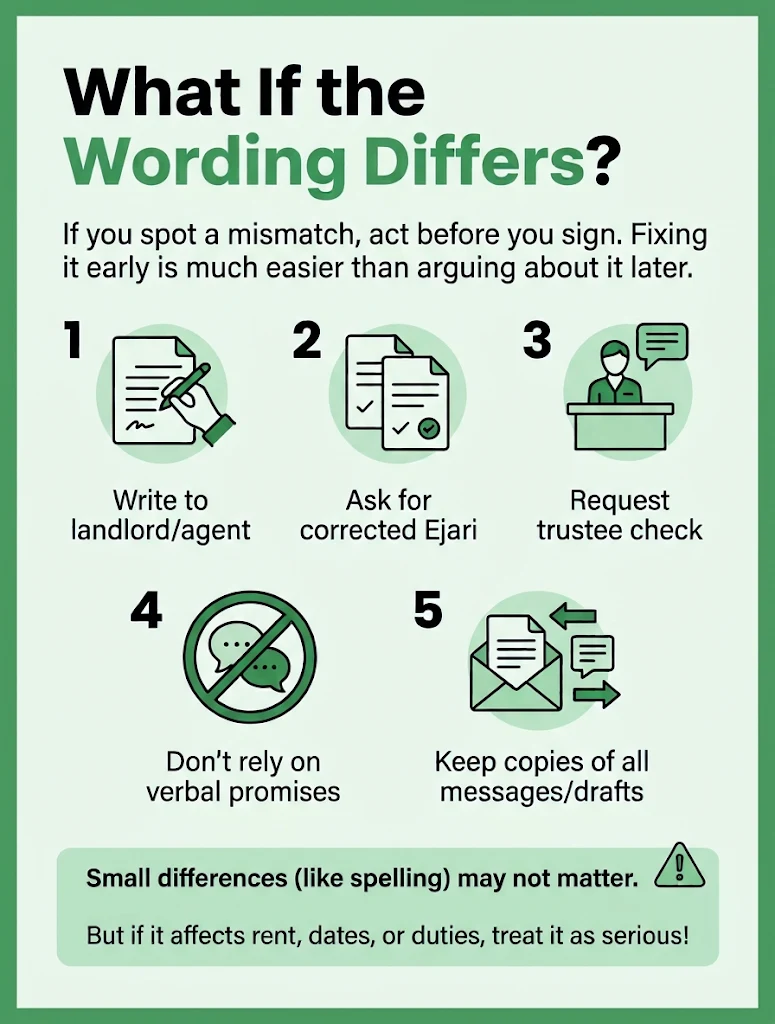
Follow these steps:
- Point out the difference to the landlord or agent in writing
- Ask for a corrected form so the Ejari contract language matches in both versions
- Ask the typing centre or registration trustee to check the text again
- Do not rely on a verbal promise that the English version will be followed
- Keep copies of every message and every draft
If the difference is small, such as a spelling variation, it may not matter. If it affects rent, dates, or duties, treat it as serious.
Can Tenants Request an English Explanation of Arabic Clauses?
Yes, you can ask for one. Landlords, agents, and typing centres can explain the Arabic wording in plain English, and a good agent will do this willingly. An English translation Ejari tenants request is a normal step for people who do not read Arabic.
Keep in mind that an explanation is not the same as the legal text. A friendly explanation from an agent does not replace the Arabic wording. To stay protected:
- Ask for the explanation in writing
- Ask the agent to point to the exact Arabic line they are describing
- Compare it with the English side of the form
- Raise any doubt before you sign
The Rental Dispute Centre also has conciliators who work in several languages, including English, which can help during the early stage of a dispute.
Should an Independent Translation Be Reviewed Before Signing?
For simple one-year leases, a careful read of the unified form may be enough. But an independent review is wise when the contract is long, the rent is high, or the property is commercial. A certified legal translator or a qualified advisor can compare both versions line by line.
A good review checks:
- Names, passport or Emirates ID details, and property data
- Rent, cheques, and the security deposit
- Notice periods and renewal terms
- Early exit rules and penalties
- Any additional terms or addendum
An English translation Ejari users order from an independent source can reveal hidden differences that you would not notice by yourself. Some legal sources also say additional terms should be written in both Arabic and English, so ask about this if you plan to add extra clauses.
Common Mistakes to Avoid
- Signing a contract you have not fully read
- Assuming the English side always wins
- Accepting an Arabic-only draft with no explanation
- Relying on chat messages instead of the written contract
- Using a private form instead of the unified contract
Quick Checklist Before You Sign
- Confirm that the contract is the official unified bilingual form
- Compare rent, dates, and notice periods in both languages
- Check that the Ejari contract language is consistent across all pages
- Ask for a written explanation of any unclear Arabic clause
- Review any addendum in both languages
- Keep a full copy after signing and registration
Use this list every time, because the Arabic vs. English Ejari contract issue is easiest to solve before signing.
Conclusion
The Arabic text is the version used to interpret the unified tenancy contract if the two languages differ. The English side is a helpful guide, but it should never be your only reference. By checking both versions, asking for written explanations, and getting a review when needed, you can avoid most problems. A clear Arabic tenancy contract that both parties understand is the best protection for everyone involved. In the Arabic vs. English Ejari contract question, careful reading beats hopeful guessing.
Need help reviewing your contract? Contact the team at Ejari today. Our experts can help you check your tenancy documents, explain unclear clauses, and guide you through Ejari registration. Reach out now so you can sign with confidence.
Frequently Asked Questions
Is the Ejari tenancy contract bilingual?
Yes. The unified tenancy contract is issued in Arabic and English, and it is the standard format used for Ejari registration.
Does the Arabic wording prevail over the English translation?
Yes. The unified contract states that the Arabic text is used when there is a conflict or a difference in interpretation. This makes the Arabic version of the rental agreement the main reference in a dispute.
Can tenants request an English explanation of Arabic clauses?
Yes. Tenants can ask the landlord, agent, or typing centre for an explanation. An English translation Ejari tenants receive should be requested in writing, and it should point to the matching Arabic line.
Should an independent translation be reviewed before signing?
It is a smart step, especially for long, high-value, or commercial leases. A certified translator or advisor can compare both versions and flag any difference in rent, dates, or duties.
Can I register Ejari with an English-only contract?
The accepted format for registration is the official unified contract, which is bilingual. An English-only private form may cause delays or refusal, so use the official form from the start.