
A Guide to Ejari for Shared Accommodation in Dubai

Sharing accommodation has become increasingly common in Dubai, especially among young professionals, students, and newly arrived expatriates looking to reduce living expenses. Whether you’re sharing an apartment with friends, colleagues, or family members, it’s important to understand how tenancy registration works under Dubai’s regulations.
Many tenants assume that only the primary tenant matters when registering a lease. However, questions frequently arise about co-occupants, flatmates, and whether additional residents should be included in the tenancy record. Understanding Ejari for shared accommodation helps tenants maintain accurate occupancy records while avoiding misunderstandings during their tenancy.
This guide explains shared tenancy arrangements, the role of co-occupants, how flatmates fit into the Ejari system, and the factors tenants should consider before moving into shared accommodation in Dubai.
What Is Shared Accommodation?
Shared accommodation refers to a residential property occupied by more than one person, where residents share living spaces such as bedrooms, kitchens, or common areas.
Common examples include:
- Friends sharing an apartment
- Colleagues renting together
- Students living in shared housing
- Family members sharing a villa
- Married couples renting jointly
- Employer-arranged shared accommodation
Although these arrangements vary, the tenancy agreement remains the foundation of the occupancy relationship.
Understanding Ejari for Shared Accommodation
Ejari for shared accommodation follows the same tenancy registration principles as any other residential lease. However, shared living arrangements often involve additional considerations regarding who occupies the property and how occupancy is documented.
Depending on the tenancy agreement, there may be:
- One primary tenant
- Multiple tenants named on the lease
- Additional approved occupants
- Family members living with the tenant
- Flatmates occupying shared spaces
Understanding the structure of the tenancy agreement is the first step toward ensuring compliance.
Why Accurate Occupancy Records Matter
Keeping occupancy information accurate benefits everyone involved in the tenancy.
Proper records help:
- Maintain transparency
- Support tenancy administration
- Reduce misunderstandings
- Clarify occupancy arrangements
- Assist with government-related procedures
- Protect both landlords and tenants
Accurate occupancy information also helps ensure that everyone living in the property is properly documented where required.
Who Are Co-Occupants?
One of the most common questions among tenants is, “What are co-occupants?”
A co-occupant is generally someone who lives in the rented property but may not necessarily be the primary tenant named on the tenancy agreement.
Examples may include:
- A spouse
- Children
- Parents
- Relatives
- Approved flatmates
- Other authorized residents
The exact treatment of co-occupants depends on the tenancy agreement, landlord approval, and applicable regulations.
Shared Tenancy vs. Co-Occupancy
Although these terms are often used interchangeably, they describe different situations.
Shared Tenancy
In a shared tenancy:
- Two or more tenants may be listed on the tenancy agreement.
- Responsibilities are typically shared among the named tenants.
- The tenancy relationship is established through the lease.
Co-Occupancy
With co-occupancy:
- One individual is usually the primary tenant.
- Other approved residents occupy the property.
- Not every resident is necessarily a party to the tenancy contract.
Understanding this distinction helps tenants choose the most appropriate housing arrangement.
For official tenancy regulations and guidance relating to rental agreements in Dubai, tenants can refer to the Dubai Land Department (DLD), which oversees the Ejari registration system.
Can Flatmates Be Added to Ejari?
One of the most frequently asked questions is whether flatmates can be included in an Ejari record.
The answer depends on several factors, including:
- The tenancy agreement
- Landlord approval
- Occupancy arrangements
- Applicable registration requirements
Before adding additional occupants, tenants should ensure that their lease permits shared occupancy and that all housing arrangements comply with relevant regulations.
How to Register Co-Occupants (Flatmates)
Where permitted, registering or documenting additional occupants generally begins with reviewing the tenancy agreement.
The process typically involves:
Review the Lease Agreement
Confirm whether shared occupancy is allowed.
Speak With the Landlord
Obtain approval where required before additional residents move into the property.
Verify Occupancy Requirements
Understand whether supporting information or documentation is needed.
Update Tenancy Records
Where applicable, ensure tenancy information accurately reflects approved occupants.
Every tenancy arrangement is unique, so requirements may differ depending on the lease structure.
Can I Share a Room With My Partner in Dubai?
Another common question among expatriates is whether partners can share rented accommodation.
The answer depends on factors such as:
- The tenancy agreement
- Landlord policies
- Building regulations
- Applicable UAE laws and regulations
Before making accommodation arrangements, tenants should always ensure they comply with current legal requirements and the terms of their tenancy agreement.
Common Situations in Shared Accommodation
Shared accommodation can take several forms, and understanding the differences helps tenants choose an arrangement that best matches their needs and tenancy responsibilities.

Whether you are sharing with family, friends, colleagues, or fellow students, understanding your tenancy structure makes it easier to manage your accommodation responsibly.
Examples include:
Friends Renting Together
Several friends jointly lease an apartment.
Working Professionals
Colleagues share accommodation to reduce rental costs.
Families
Family members occupy a property under one tenancy agreement.
Corporate Housing
Companies provide accommodation shared by multiple employees.
Each arrangement may involve different tenancy structures and occupancy responsibilities.
What Are the Benefits of Registering Shared Accommodation Properly?
Whether you are the primary tenant or one of several residents, ensuring that your accommodation arrangement is properly documented offers several advantages.
Some of the key benefits include:
- Clear occupancy records
- Improved transparency between tenants and landlords
- Better tenancy administration
- Reduced misunderstandings
- Easier management of shared living arrangements
- Proper documentation for approved occupants
Maintaining accurate tenancy records helps create a smoother rental experience for everyone involved.
Common Mistakes Flatmates Should Avoid
Many issues in shared accommodation arise because tenants make assumptions about occupancy rules rather than confirming the details beforehand.
Some of the most common mistakes include:
Moving in Without Landlord Approval
Some tenants invite additional occupants before confirming whether the tenancy agreement allows shared accommodation.
Assuming Every Resident Is Automatically Registered
Living in a property does not necessarily mean every occupant is automatically reflected in tenancy records where applicable.
Ignoring Building Rules
Some residential communities have occupancy policies that tenants should review before sharing accommodation.
Failing to Update Occupancy Information
If approved occupancy arrangements change during the tenancy, relevant records should be kept up to date where required.
Not Discussing Responsibilities
Flatmates should clearly agree on matters such as:
- Rent contributions
- Utility payments
- Maintenance responsibilities
- House rules
- Notice periods
Open communication often prevents disputes later.
Shared Accommodation Best Practices
A successful shared tenancy depends on more than simply signing a lease.
Consider these practical recommendations:
- Choose compatible flatmates.
- Read the tenancy agreement carefully.
- Confirm occupancy permissions before moving in.
- Keep copies of important tenancy documents.
- Communicate openly about shared expenses.
- Respect community and building regulations.
- Inform the landlord about approved occupancy changes where necessary.
Good planning helps create a more comfortable and well-managed living environment.
Where utility accounts are being arranged for a shared property, tenants may need a valid Ejari registration before completing account activation through DEWA.
How Shared Accommodation Differs From Subletting
Shared accommodation and subletting are often confused, but they are not the same.
Shared Accommodation
Shared accommodation generally involves multiple people living in the same rented property with the knowledge and approval of the landlord where required.
Subletting
Subletting usually involves a tenant renting all or part of the property to another person under a separate arrangement.
The rights, responsibilities, and permissions associated with subletting may differ from standard shared accommodation, making it important to review the tenancy agreement before making any arrangements.
When Should You Speak With Your Landlord?
Good communication with the landlord helps avoid many tenancy issues.
The following decision tree helps tenants understand when they should speak with their landlord before making changes to a shared living arrangement.
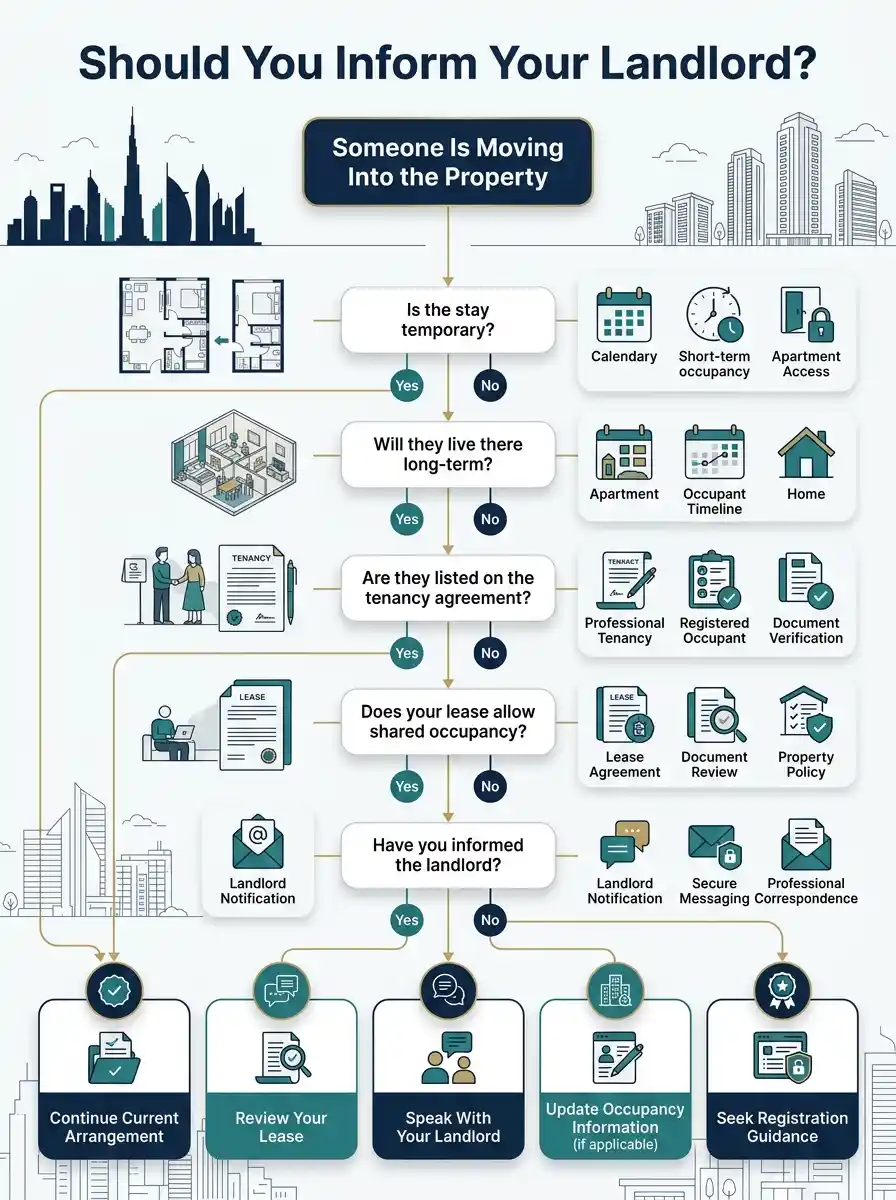
You should consider discussing matters such as:
- Adding new occupants
- Long-term guests
- Changes in occupancy
- Lease renewals
- Shared tenancy arrangements
- Questions regarding permitted occupancy
Clarifying these matters early helps maintain a positive landlord-tenant relationship. Following these decision points can help tenants communicate proactively and avoid misunderstandings throughout the tenancy.
How Ejari Support Can Help
Shared accommodation arrangements can sometimes raise questions about occupancy records, tenancy registration, and administrative requirements.
Ejari Support assists tenants with:
- New Ejari registration
- Ejari renewals
- Guidance on shared accommodation enquiries
- Document verification
- DEWA-related support
- General tenancy administration assistance
Our professional guidance helps tenants better understand their responsibilities while ensuring their tenancy documentation remains accurate and compliant.
Conclusion
Understanding Ejari for shared accommodation is important for anyone planning to share a home in Dubai. Whether you are living with friends, family members, colleagues, or approved flatmates, knowing the difference between shared tenancy and co-occupancy can help you manage your rental arrangement more effectively.
By reviewing your tenancy agreement, communicating with your landlord, and maintaining accurate occupancy information, you can enjoy the benefits of shared living while remaining compliant with Dubai’s tenancy framework. Taking the time to understand these responsibilities helps create a smoother, more transparent, and more enjoyable shared accommodation experience.
Frequently Asked Questions
What is Ejari for shared accommodation?
Ejari for shared accommodation refers to the tenancy registration process for properties occupied by multiple approved residents under a rental agreement.
What are co-occupants in Dubai?
Co-occupants are individuals who live in a rented property alongside the primary tenant, subject to the tenancy agreement and applicable regulations.
How do I register co-occupants or flatmates?
The process depends on the tenancy agreement, landlord approval, and applicable registration requirements. Tenants should review their lease and consult the relevant authorities or their registration service provider if changes are required.
Can I add a flatmate to my Ejari?
Whether a flatmate can be added depends on the tenancy arrangement, landlord approval, and applicable registration procedures.
Can I share a room with my partner in Dubai?
Accommodation arrangements should always comply with the tenancy agreement, landlord policies, and current UAE laws and regulations.