
Complete Guide to Ejari Transfer After Selling Your Property

An Ejari transfer is often one of the tenancy-related matters that property owners consider after selling a property in Dubai. When ownership changes hands, questions frequently arise about what happens to an existing tenancy contract, whether the Ejari registration must be updated, and what responsibilities the new owner inherits.
Understanding how tenancy records interact with property ownership changes can help both sellers and buyers avoid delays, administrative issues, and misunderstandings. This guide explains the relationship between property sales and Ejari registrations, the documents involved, and the steps that may be required after ownership is transferred.
What Happens to Ejari After a Property Sale?
One of the most common questions property owners ask is whether an active Ejari automatically transfers to the new owner after a sale.
In most situations, a tenancy contract remains valid even if ownership changes. The tenant’s rights generally continue under the existing lease agreement, while the new owner assumes the role of landlord for the remainder of the tenancy period.
This means that:
- Existing tenancy agreements typically remain active.
- Tenant obligations generally continue unchanged.
- New owners inherit landlord responsibilities.
- Property records must be updated accordingly.
- Future tenancy actions may require updated ownership information.
The exact requirements may vary depending on the property’s tenancy status and the circumstances of the transaction.
Understanding Ejari and Property Ownership
Before discussing an Ejari transfer, it is important to understand that Ejari registration and property ownership records are connected but serve different purposes.
Ejari Registration
Ejari records:
- Tenant details
- Landlord details
- Property information
- Contract duration
- Rental amount
Title Deed Registration
The title deed records:
- Property ownership
- Ownership transfers
- Property legal status
- Ownership rights
When ownership changes, the title deed is updated to reflect the new owner. However, tenancy-related records may also need attention to ensure information remains accurate.
Does Ejari Need to Be Updated After a Sale?
In many cases involving an Ejari property sale, ownership information associated with the tenancy may need updating to reflect the new landlord.
This becomes particularly important when:
- A tenant remains in the property after the sale.
- The tenancy agreement is still active.
- Future renewals are expected.
- Utility-related services require verification.
- New tenancy registrations will be processed later.
Keeping records updated helps avoid confusion regarding landlord responsibilities and future tenancy transactions.
Transfer Ejari to New Owner: When Is It Required?
Many buyers ask whether they need to transfer Ejari to new owner records immediately after acquiring a property.
The answer often depends on the tenancy situation.
Property Is Occupied by a Tenant
If a tenant remains under an active lease:
- The tenancy agreement usually continues.
- The new owner becomes the landlord.
- Relevant tenancy records may require updating.
- Future renewals should reflect current ownership details.
Property Is Vacant
If the property is vacant at the time of transfer:
- Existing tenancy records may no longer apply.
- Cancellation or new registration procedures may be required later.
- The new owner can register future tenancy agreements under their ownership.
Understanding the property’s occupancy status is often the first step in determining what action is needed.
Documents Commonly Required After Ownership Transfer
When handling an Ejari transfer scenario, certain documents are often requested to verify ownership and tenancy information.
Common documents may include:
- Updated title deed
- Existing Ejari certificate
- Sale and purchase documentation
- Emirates ID
- Passport copies
- Tenancy contract
- Ownership transfer confirmation
The specific requirements may vary depending on the registration authority and tenancy circumstances.
Common Mistakes to Avoid
Property buyers and sellers occasionally encounter delays due to documentation issues.
Common mistakes include:
- Failing to update ownership records
- Missing tenancy documentation
- Incorrect landlord details
- Delayed communication with tenants
- Incomplete supporting documents
- Mismatched property information
Preparing all relevant documents in advance helps streamline the process.
The following checklist summarizes the key documents commonly associated with tenancy record updates after a property sale.
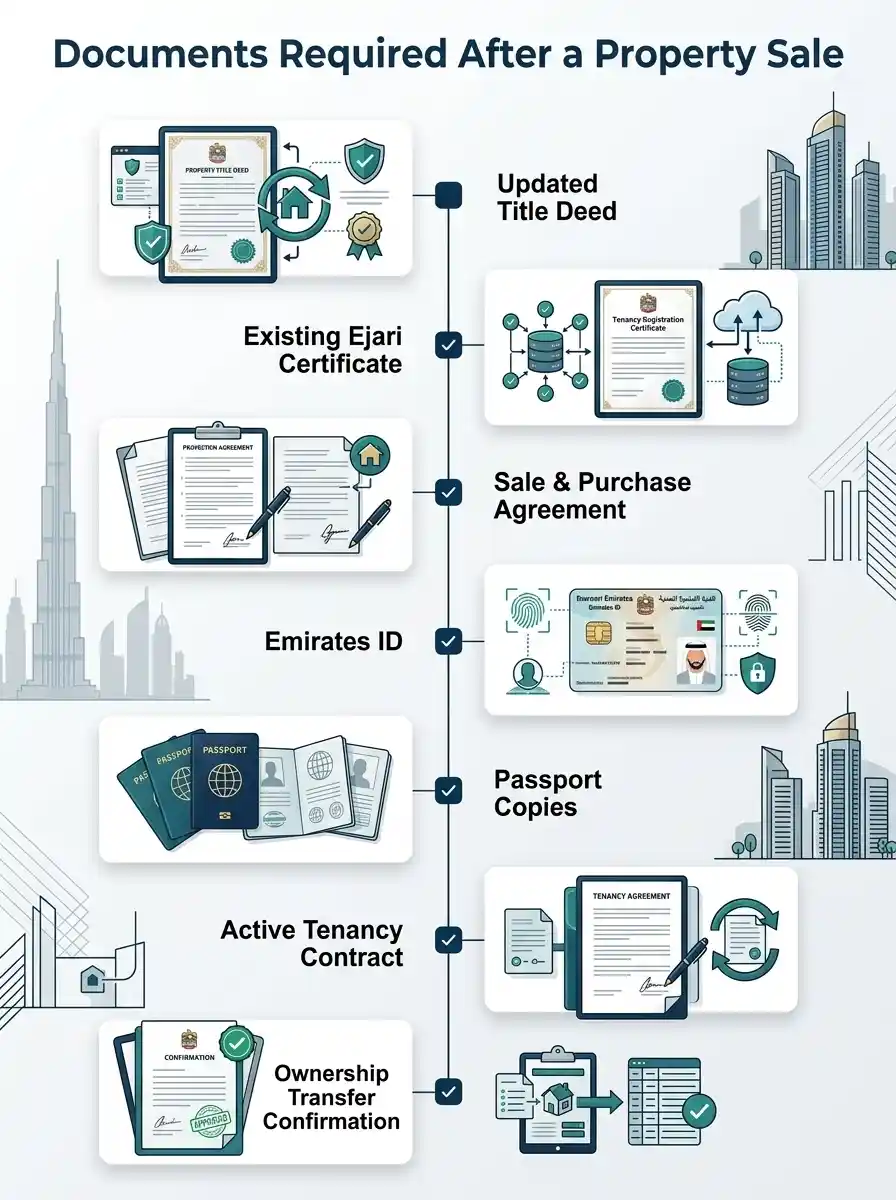
Having these documents readily available can significantly reduce administrative delays during the ownership transition.
Ejari When Selling Apartment: Responsibilities of the Seller
When considering Ejari when selling apartment units, sellers should ensure that all tenancy information is transparent and properly documented.
Key responsibilities often include:
- Providing accurate tenancy records
- Sharing active lease information
- Informing buyers about tenant occupancy
- Supplying Ejari documentation
- Coordinating handover procedures
Transparency helps protect both the buyer and the tenant while ensuring a smoother transaction.
Responsibilities of the Buyer
The new owner should also take steps to understand the tenancy situation before completing the purchase.
Important considerations include:
- Reviewing tenancy agreements
- Confirming lease expiry dates
- Understanding rental obligations
- Verifying Ejari information
- Reviewing title deed records
Proper due diligence helps prevent unexpected complications after ownership transfer.
How Does the Title Deed Affect Ejari?
An Ejari Dubai title deed serves as the official record of property ownership.
When ownership changes, the title deed is updated first. This updated ownership record then becomes the basis for any future tenancy-related updates.
The relationship between the two systems helps ensure:
- Accurate ownership records
- Correct landlord information
- Improved tenancy transparency
- Better compliance with regulations
- Efficient property administration
For this reason, title deed updates are a critical part of the property sale process.
What Happens During Lease Renewal After a Sale?
If the tenant remains in the property after ownership changes, future lease renewals generally need to reflect the current owner’s information.
During renewal:
- Ownership information is reviewed.
- Updated landlord details may be required.
- Tenancy records are aligned with current ownership.
- Registration information is verified.
Keeping records current helps ensure a smooth renewal process for all parties involved.
The ownership transition process becomes easier to understand when viewed as a simple timeline from sale completion to tenancy record updates.
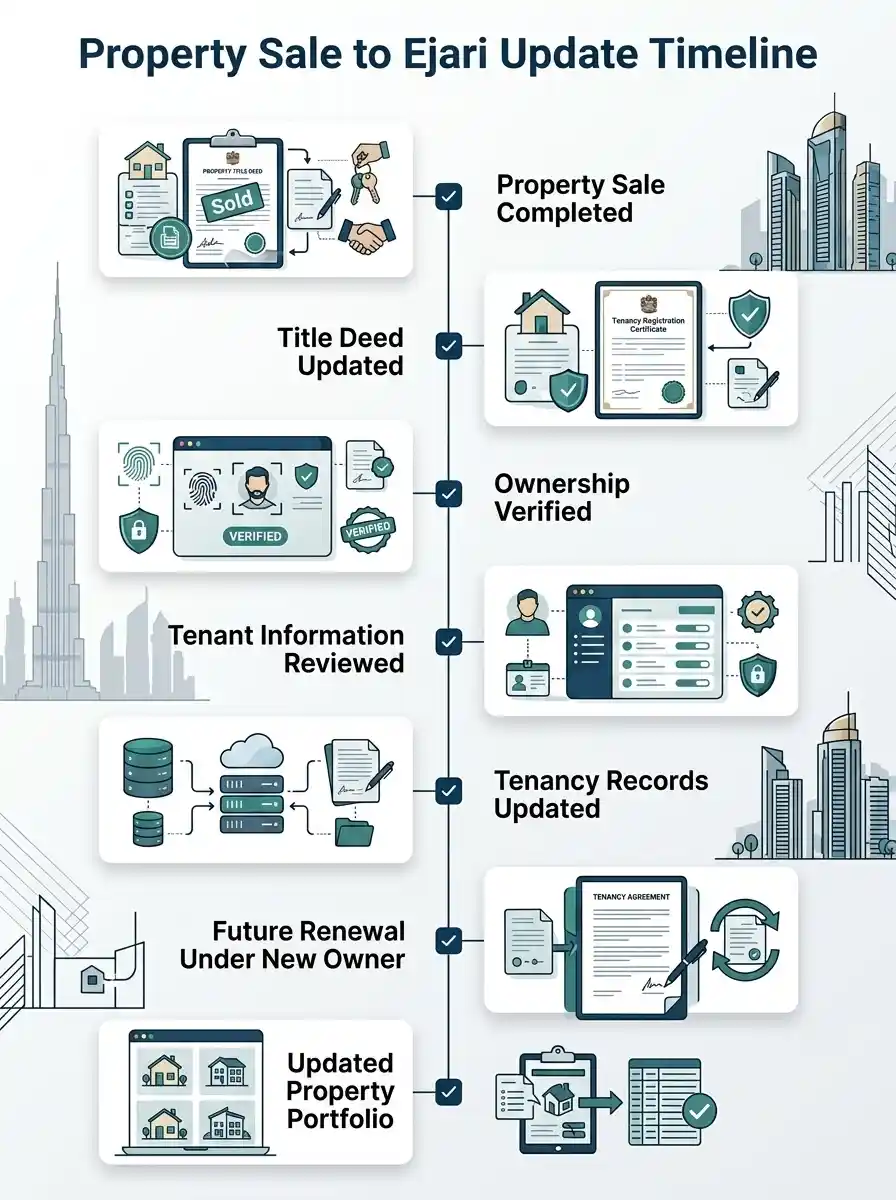
Following these stages helps ensure that ownership records and tenancy records remain aligned after the transaction.
Tips for a Smooth Property Ownership Transition
To avoid complications following a property sale:
- Review tenancy agreements before closing.
- Verify the property’s occupancy status.
- Maintain copies of all ownership documents.
- Keep communication open with tenants.
- Update ownership records promptly.
- Retain all tenancy-related paperwork.
These steps can help reduce confusion and ensure a more efficient transition.
How Ejari Support Can Help
Property transactions often involve multiple administrative requirements, especially when active tenants are involved.
Ejari Support assists with:
- Ejari registration
- Ejari renewals
- Ejari-related guidance after ownership changes
- Document verification
- DEWA-related support
- Tenancy administration services
Our professional assistance can help property owners navigate tenancy requirements while maintaining accurate records.
Conclusion
An Ejari transfer becomes an important consideration whenever a tenanted property changes ownership. While tenancy agreements often remain valid after a sale, ownership information and tenancy records may require updates to reflect the new landlord.
Understanding how to transfer Ejari to new owner records, reviewing tenancy documentation, and ensuring accurate ownership information can help buyers, sellers, and tenants avoid unnecessary complications. Whether you are managing an Ejari property sale or evaluating Ejari when selling apartment units, maintaining accurate records is essential for smooth property administration in Dubai.
FAQs
Does Ejari automatically transfer to the new owner after a property sale?
Ownership records are updated through the title deed process, while tenancy-related records may require separate updates depending on the tenancy situation.
Can tenants remain in the property after ownership changes?
In many cases, existing tenancy agreements continue even after the property is sold.
What documents are usually required after a property sale?
Common documents include the updated title deed, tenancy contract, Ejari certificate, identification documents, and ownership transfer records.
Does the title deed affect Ejari registration?
Yes. The title deed establishes legal ownership and helps support future tenancy-related updates.
Is a new Ejari required immediately after every property sale?
Requirements depend on whether the property is occupied, vacant, or undergoing future tenancy changes.