
Ejari for Student Housing: 5 Simple Rules to Know

Moving to Dubai for university brings a long checklist, and one item that often confuses students and parents alike is tenancy registration. Understanding Ejari for student housing is not just a formality. It affects visa paperwork, utility connections, and legal protection if something goes wrong with the landlord or roommates.
This guide walks through how Ejari for student housing actually works, who can sign the contract, and what recent changes to shared housing rules mean for students living in Dubai.
Can a Student Register Ejari in Dubai?
In most cases, yes. A student who is renting a unit in their own name, with a valid residence visa and Emirates ID, can register a tenancy contract just like any other tenant. This is the starting point for anyone researching Ejari for student housing, since the registration process itself does not change based on age or occupation.
That said, there are a few practical points to keep in mind:
- The tenant listed on the contract must have a valid Emirates ID and passport copy
- Full-time students without independent income may still register if the lease and documents are in order
- Landlords sometimes prefer a working sponsor or guardian as the named tenant for added assurance
- The registration steps through Dubai REST remain the same regardless of who signs
So while Ejari for student housing follows the same basic process as any other rental in Dubai, students should expect landlords to ask more questions before approving the lease.
Understanding University Renting Dubai Options
University renting Dubai comes in a few different forms, and each one interacts differently with tenancy registration requirements. Students generally choose between university-managed dormitories, private shared apartments, or standalone units rented directly from a landlord.
A quick breakdown of common student housing arrangements:
- On-campus or university-managed housing, which is often handled internally without a separate Ejari contract
- Private shared apartments rented through an agent or directly from an owner
- Studio or one-bedroom units for students who prefer to live independently
- Group leases where several students share one unit and split the rent
Anyone comparing student housing options should check with their institution first, since some universities require proof of registered accommodation as part of enrollment or visa sponsorship.
Do University Students Need Ejari for a Visa?
This is one of the most common questions students and parents ask. In general, a UAE residence visa for a student is usually sponsored by the university or a parent or guardian, not directly tied to the Ejari certificate itself. However, having a registered tenancy contract still matters.
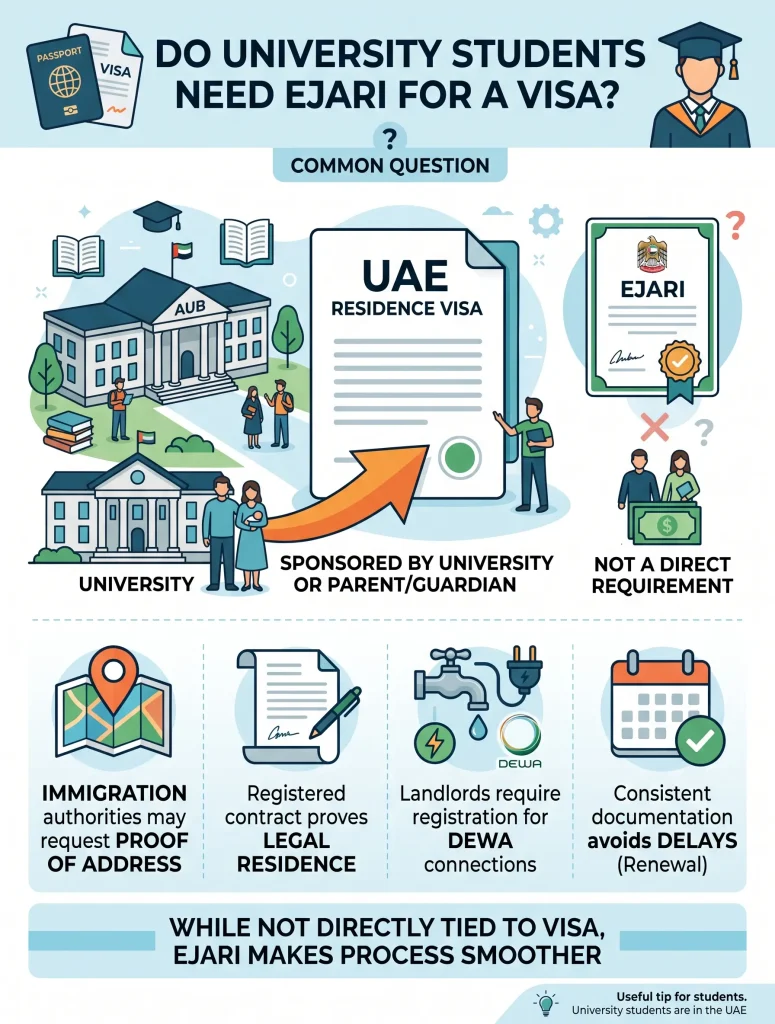
Here is why Ejari for student housing often comes up during visa-related processes:
- Immigration authorities may request proof of address as supporting documentation
- A registered contract makes it easier to prove where the student legally resides
- Landlords typically require Ejari registration before activating DEWA connections
- Keeping documentation consistent avoids delays if the visa needs renewal
So while Ejari for student housing is not always the direct visa requirement, it plays a supporting role that makes the overall visa and housing process smoother.
Can a Guardian Sign an Ejari Contract for a Student?
Yes, and this is actually one of the more common setups in the market. A guardian-sponsored lease allows a parent or legal guardian to be the named tenant on the contract, while the student lives in the unit as the primary occupant. This arrangement often makes landlords more comfortable, especially when the student is younger or does not yet have a steady income.
Key points about a guardian-sponsored lease:
- The guardian signs the tenancy contract and appears as the registered tenant on Ejari
- The student can be added as an occupant, especially if living with siblings or roommates
- This kind of arrangement often makes rent negotiation and renewal easier
- Guardians remain legally responsible for rent payments and contract terms
For families sending a child to study in Dubai, this kind of arrangement is often the simplest way to handle Ejari for student housing without complications.
Student Accommodation Tenancy and Shared Housing Rules
Student accommodation tenancy has come under new scrutiny following Dubai Law No. 4 of 2026 on shared housing, which introduces clearer rules for shared units across the emirate. This law specifically recognizes female students and male students as distinct categories under the shared housing framework, alongside families and other groups.
What this means for students living in shared housing going forward:
- Shared student units will require a permit from Dubai Municipality before being rented out
- Occupancy limits and minimum space per resident will apply to shared student housing
- Tenancy and management agreements for shared units are expected to be recorded through a linked government registry
- Existing operators of shared student accommodation typically get a grace period to meet the new standards
Because these arrangements often involve multiple occupants sharing one unit, the updated rules directly affect how landlords and students should approach tenancy registration going forward.
Is Shared Student Housing Covered by the New Shared Housing Law?
Yes. The new law explicitly names female students and male students among the categories of shared housing it regulates. This confirms that student accommodation tenancy involving shared bedrooms, partitions, or bed spaces falls under the same licensing and registration requirements as other shared housing types.
Practical takeaways for students and guardians:
- Confirm that any shared unit you are considering has, or is working toward, the required permit
- Ask the landlord or agent whether the property is registered under the shared housing framework
- Keep a copy of your signed contract regardless of whether it is a private unit or shared space
- Watch for updates from Dubai Municipality as detailed licensing requirements continue to roll out
Bringing It All Together
Whether you are a student signing your own lease, a parent handling the paperwork on their behalf, or comparing university rental options in Dubai before the semester starts, the underlying goal is the same. Ejari for student housing exists to protect both tenants and landlords, and getting it right from day one avoids headaches later with visas, utilities, or disputes over rent.
A simple checklist before signing any student lease:
- Confirm who will be the named tenant on the contract
- Check whether the property is a shared unit covered under the new housing law
- Keep copies of the Emirates ID, passport, and signed contract for every occupant
- Register the tenancy promptly to avoid delays with DEWA or visa paperwork
Conclusion
Navigating Ejari for student housing does not need to be complicated once you understand the basics, from who can sign the lease to how shared accommodation rules apply. Whether you are a student, a parent, or a guardian handling the paperwork from abroad, getting the registration right protects everyone involved.
If you need help registering a lease, setting up a guardian-sponsored lease, or understanding how the new shared housing rules apply to your situation, the team at Ejari is here to help. Reach out to the team at Ejari today and get your student tenancy registered correctly from the start.
Frequently Asked Questions
What documents does a student need to register Ejari in Dubai?
A student typically needs a valid Emirates ID, passport copy, signed tenancy contract, and sometimes a letter from their university confirming enrollment.
Can international students living in dormitories skip Ejari registration?
Often yes, since many university-managed dormitories are handled internally by the institution rather than through a separate individual tenancy contract.
What happens if a student moves out before the lease ends?
The remaining tenant or guardian is usually still responsible for the contract terms, so any early exit should be discussed with the landlord in writing.
Does a guardian need to be physically present in Dubai to sign a lease?
Not always, since many landlords accept a power of attorney or notarized authorization allowing someone else to sign on the guardian’s behalf.
Are utility bills included when renting through university-managed housing?
This varies by institution, so students should always confirm with their university whether DEWA charges are bundled into the accommodation fee or billed separately.