
Dubai Population Growth and Rental Demand: 5 Big 2026 Trends
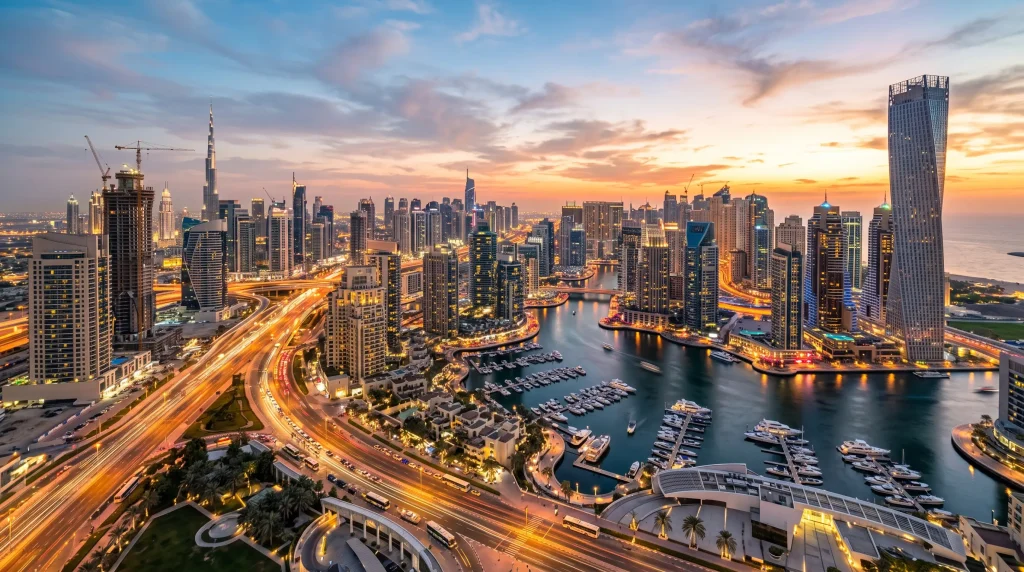
Dubai has crossed a major milestone this year, with its resident population now well above four million people. That growth is not just a headline statistic; it is the single biggest force behind the surge in tenancy registrations across the city. Understanding Dubai population growth and rental demand helps explain why Ejari numbers keep climbing even as the market matures.
This blog looks at what is fueling this growth, which industries are behind it, and whether housing supply can realistically keep up.
Why Is the Dubai Rental Market So Strong in 2026?
The short answer is people. Dubai continues to add somewhere between 100,000 and 200,000 new residents every year, and each of those residents needs a place to live. This steady inflow is the core driver behind Dubai population growth and rental demand this year, and it shows no signs of slowing.
A few factors keeping the rental market active:
- The population has surpassed four million and continues rising at a fast pace
- Long-term visa programs, including the Golden Visa, are attracting settled, committed residents rather than short-term visitors
- Corporate relocations continue to bring entire teams of employees who need housing quickly
- Rental contract registrations have hit record levels through the first half of the year
All of this reinforces why Dubai population growth and rental demand remain one of the strongest structural trends in the emirate real estate market right now.
How Does Population Growth Affect Ejari Registrations?
Every new resident who signs a lease needs that lease registered through Ejari, so population growth translates almost directly into higher registration volumes. This is one of the clearest links between Dubai population growth and rental demand and the day-to-day workload of the tenancy registration system.
Here is how that connection plays out in practice:
- More residents mean more new tenancy contracts being signed and registered each month
- Renewals also rise as long-term residents stay in the city rather than relocating elsewhere
- Areas with strong population inflows tend to see the fastest growth in Ejari transaction volumes
- Government systems have had to process record numbers of contracts as this trend continues
Because of this direct relationship, tracking Ejari registration data is actually one of the best ways to measure real-time Dubai population growth and rental demand rather than waiting for annual census figures.
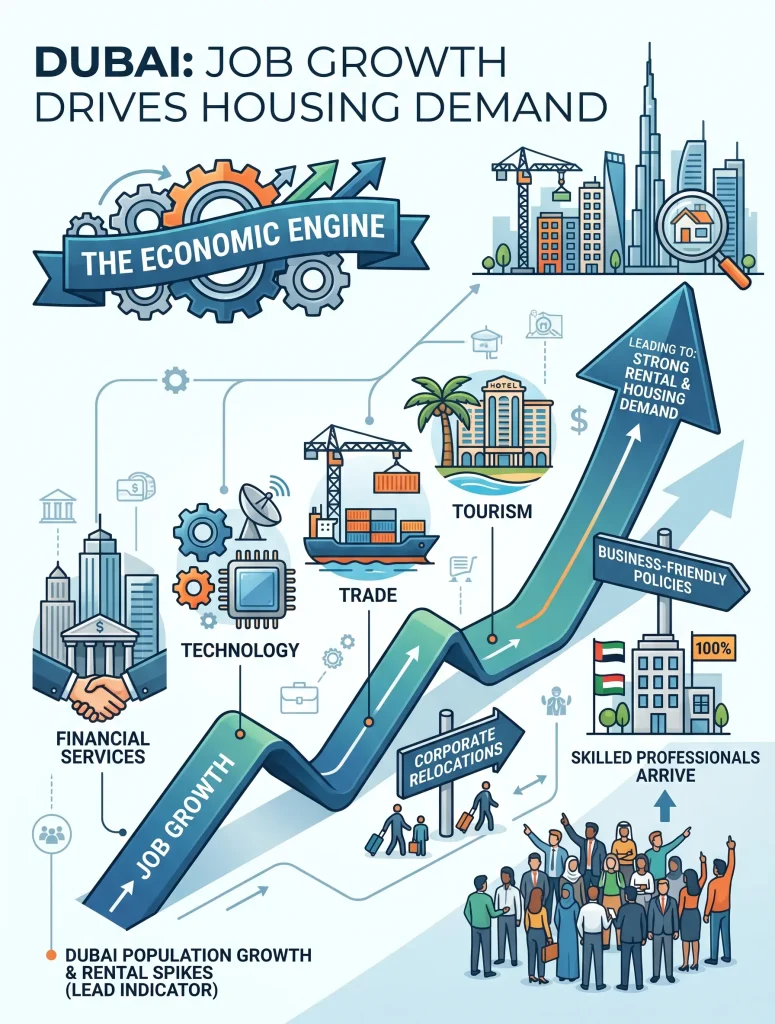
Dubai Job Growth Housing: The Economic Engine Behind Demand
Population growth does not happen in isolation. It is closely tied to Dubai job growth and housing trends, since people generally move to a city because there is work waiting for them. The UAE economy has continued expanding at a healthy pace, and that expansion feeds directly into rental demand.
Key elements of this dynamic:
- Financial services, technology, trade, and tourism sectors have all expanded hiring in recent years
- Corporate headquarters relocations have brought large batches of employees who need housing at once
- New business-friendly policies, including full foreign ownership rules, have encouraged company expansion
- Job creation in emerging sectors continues to draw skilled professionals from around the world
This tight link between employment and housing means that Dubai job growth and housing patterns are often a leading indicator of where Dubai population growth and rental demand will spike next.
Employment-Driven Rental Demand Across Key Sectors
Employment-driven rental demand is not spread evenly across the city. Certain industries are pulling in far more new tenants than others, which shapes where rental activity concentrates.
Sectors contributing most to this trend:
- Technology and fintech companies expanding regional operations
- Financial services firms relocating headquarters or opening new offices
- Trade and logistics businesses benefiting from Dubai’s global connectivity
- Tourism and hospitality, which continues to recover and expand hiring
Because this employment-driven rental demand often arrives in waves tied to specific company announcements or sector booms, certain communities near business hubs tend to see sudden spikes in Dubai population growth and rental demand and tenancy registrations alike.
Expat Population Dubai 2026: Who Is Actually Moving In?
Understanding expat population Dubai 2026 figures helps explain the demographic side of this growth story. Expatriates make up roughly ninety percent of Dubai residents, and that share has remained remarkably consistent even as the total population climbs.
What defines this demographic profile:
- A growing share of long-term visa holders, including Golden Visa recipients and their families
- Skilled professionals arriving from Western Europe, South Asia, and CIS countries
- A shift from short-term renting toward long-term commitment, including property ownership
- Family relocations that add multiple household members rather than single tenants
This more settled expat population in Dubai 2026 reflects that demand is not just growing in volume but also shifting toward longer lease terms and more stable tenancy patterns.
Is Dubai Housing Supply Keeping Up with Demand?
This is where the picture becomes more mixed. While developers have ramped up construction significantly, supply has not always matched the pace of population growth. Estimates suggest Dubai needs tens of thousands of new residential units every year just to keep pace with incoming residents.
Key supply and demand dynamics to watch:
- Annual housing completions have often fallen short of the units theoretically needed for new residents
- Delivery delays are common, with only a portion of scheduled units actually completing on time each year
- Supply is concentrated in certain communities, leaving others with tighter availability
- This imbalance keeps pressure on rents upward even as the overall market matures
Given this gap, Dubai population growth and rental demand are likely to remain elevated for the foreseeable future, even if the pace of rent increases eventually slows.
What This Means for Renters and Landlords
For tenants, this environment means starting your search early and being ready to register your Ejari contract quickly once you find a unit. For landlords, it means demand remains strong, but tenants increasingly expect efficient, transparent registration processes.
Practical takeaways for anyone navigating this market:
- Start your housing search well before your current lease ends, since competition remains high
- Register your Ejari contract promptly to avoid delays with utilities or visa-related paperwork
- Watch job growth announcements in your industry, since they often signal where rental demand will rise next
- Expect steady rather than explosive rent growth as the market moves into a more balanced phase
Conclusion
Dubai population growth and rental demand are the thread connecting record population figures, strong job creation, and record numbers of tenancy registrations this year. As long as people keep moving to Dubai for work and long-term residency, Ejari activity is likely to remain elevated across the city.
If you are moving to Dubai for a new job or relocating your family, the team at Ejari can help you register your tenancy contract quickly and correctly. Reach out to the team at Ejari today and get your housing paperwork sorted without delay.
Frequently Asked Questions
Does every new resident in Dubai need to register a tenancy contract?
Yes, anyone renting a home in Dubai is generally required to register their lease through Ejari regardless of how long they plan to stay.
Are companies required to help employees with housing registration?
Not always, though many larger employers assist with relocation support, including guidance on tenancy contracts and Ejari registration.
Which areas are seeing the fastest growth in new tenancy contracts?
Communities near major business hubs and newer developments tend to see the sharpest increases as companies relocate and hire.
Does population growth affect rental prices differently across property types?
Yes, since demand for certain unit types, particularly smaller apartments, has grown faster than supply in some communities.
How can renters prepare for a competitive rental market?
Having documents ready in advance, including Emirates ID and proof of income, helps renters move quickly once they find a suitable unit.