
How to Resolve Ejari Rental Disputes in Dubai?

In Dubai’s highly dynamic and rapidly expanding real estate sector, maintaining a structured, legally sound relationship between property owners and occupants is essential for market stability. Ejari rental disputes are an important part of Dubai’s regulated rental system, serving as the ultimate legal cross-reference whenever administrative friction occurs. When serious disagreements arise between tenants and landlords, an active Ejari registration acts as official legal proof of the tenancy agreement, leaving no room for hearsay or unverified claims. This digital ledger helps judicial authorities verify precise contract terms, cross-examine financial commitments, and resolve complex housing issues fairly.
In Dubai, rental disputes are handled through official, dedicated channels, and the Ejari platform plays a key role in supporting evidence during these cases. Whether it is a intense disagreement about arbitrary rent increases, structural maintenance obligations, unexpected building evictions, or contested contract terms, Ejari ensures that the tenancy is legally documented and properly recorded under the watchful eye of the state.
This comprehensive guide explains exactly how Ejari rental disputes are handled within the emirate, how the system actively supports tenant rights Dubai regulations, and why it remains an essential pillar for protecting both tenants and landlords alike. By establishing an unalterable framework of transparency, the system keeps the Dubai real estate market functioning smoothly.
What is Ejari in rental disputes?
The phrase Ejari rental disputes refers directly to formal legal cases where a registered digital tenancy contract is produced before a judge or arbitrator as binding proof during disagreements between tenants and landlords. Without this document, the legal machinery of the emirate cannot formally recognize that a valid landlord-tenant relationship even exists within a mainland property boundary.
Ejari is an official government system that records all rental agreements in Dubai. When a dispute arises, this specific digital record becomes a key document used by authorities to understand lease terms, contract conditions, and historical riders. Because Ejari rental disputes rely completely on verified agreements that have been timestamped and indexed by municipal servers, both parties are treated fairly under UAE rental law. It removes the ambiguity of hand-written addendums or informal oral promises that often complicate real estate dealings elsewhere.
More details about seamless registration support and safeguarding your lease status can be found at Ejari Support website.
How Ejari helps in resolving disputes
Navigating a corporate or residential lease conflict becomes drastically simpler because the digital system provides an unalterable, pre-verified record of the rental agreement. When conflicts escalate to formal mediation, judicial authorities refer directly to the Ejari registry to confirm the foundational details of the arrangement. This includes verifying the exact rent amount, the contract duration, the agreed-upon payment frequencies, and the specific maintenance responsibilities assigned to both parties.
This real-time data access reduces administrative confusion and ensures that judicial decisions are based entirely on official documentation rather than conflicting verbal claims or alterable paper copies. Ultimately, Ejari strengthens legal clarity and speeds up dispute resolution in Dubai rental cases, saving businesses and individuals thousands of dirhams in prolonged litigation costs.
Ejari and Tenancy Contract Registration in Dubai
A properly registered tenancy agreement is one of the most important documents a tenant or landlord can have when dealing with a rental dispute. Ejari creates an official record of the tenancy, including the agreed rent, contract duration, and other important terms that may become relevant if a disagreement arises. If you want to understand the registration process, required documents, renewal requirements, and how Ejari supports your tenancy rights, read our Tenancy Contract Registration in Dubai guide.
Role of Rental Dispute Settlement Center
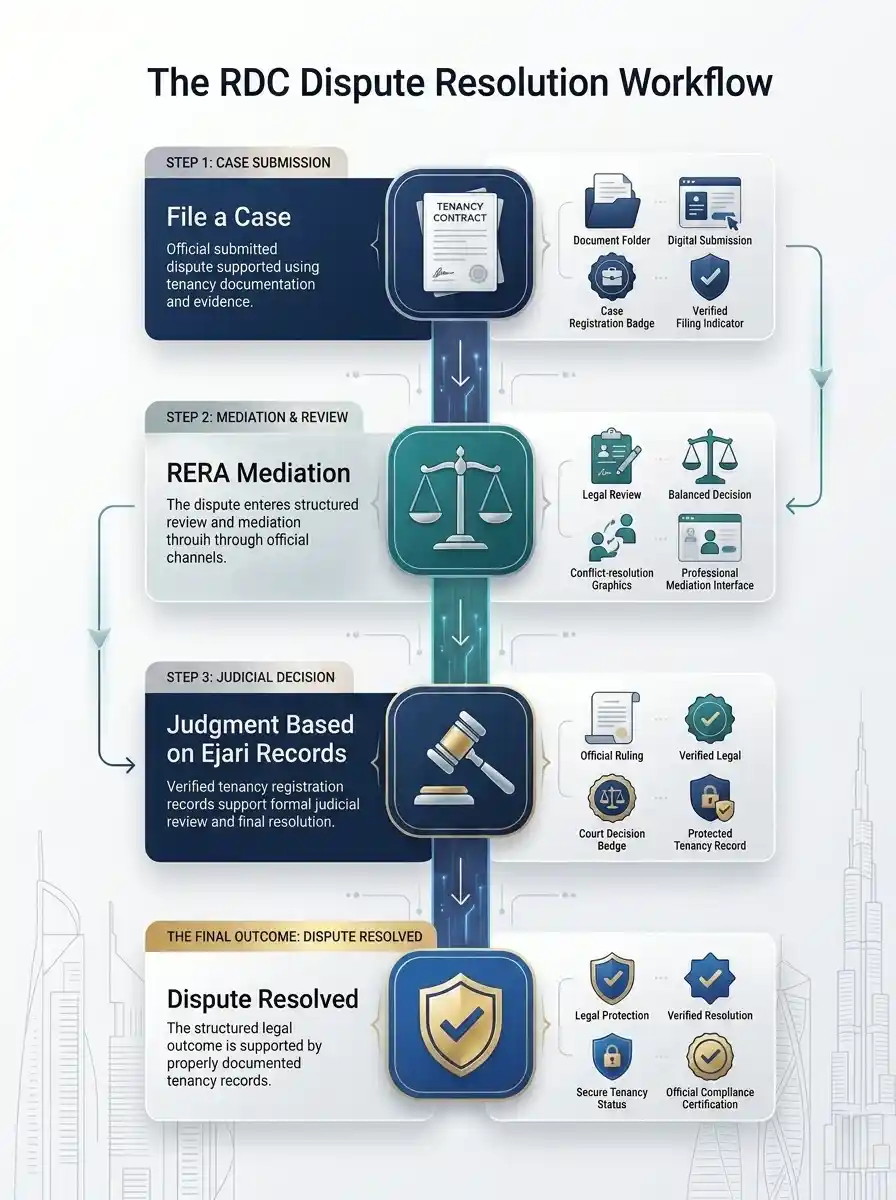
In Dubai, Ejari rental disputes are handled through the Rental Dispute Settlement Center (RDSC), which is the specialized judicial arm of the Dubai Land Department responsible for resolving conflicts between tenants and landlords. Located at the core of Dubai’s real estate governance, this authority uses Ejari records as primary legal evidence when reviewing cases.
If a party attempts to lodge a formal complaint without an active Ejari certificate, the RDSC system will typically reject or pause the filing. Without Ejari, proving tenancy terms becomes incredibly difficult, which may delay the resolution process or void the case entirely.
Official Dubai authority information, along with detailed step-by-step judicial filing fee structures, can be found directly at Dubai Land Department (DLD) website.
Ejari as legal evidence
One of the strongest advantages of Ejari rental disputes is that Ejari acts as absolute legal evidence in dispute resolution processes. It confirms to the court that the rental agreement is officially registered, compliant with local codes, and approved by the sovereign authorities of the emirate.
This comprehensive validation includes the binding rent value, specific property unit dimensions, and clear contract durations. Because of this structural framework, Ejari ensures fair, transparent, and legally supported decisions in rental conflicts, completely insulating the real estate ecosystem from predatory practices or fraudulent contract modifications.
Tenant rights under Ejari rental disputes
Ejari rental disputes play an important role in protecting tenant rights Dubai regulations. Tenants can use their active Ejari certificate to prove to any governing entity that their lease is completely valid, active, and legally recognized by the state.
If a landlord attempts to increase rent unfairly outside of the permitted RERA parameters, or tries to violate contract terms by cutting off utility lines, Ejari serves as the tenant’s official proof of agreement conditions. This ensures tenants are fully protected under Dubai’s strict rental laws, allowing them to counter unlawful evictions with absolute confidence.
Landlord protection through Ejari
Conversely, Ejari rental disputes also protect landlords by ensuring that tenancy agreements are legally enforceable across all municipal levels. If a tenant fails to comply with contract terms such as defaulting on post-dated rent checks, damaging the structural integrity of the property, or sub-leasing the premises without authorization, Ejari provides official documentation to support the landlord’s financial and legal claims.
This helps maintain a healthy balance between both parties and ensures fair, swift treatment in disputes. By providing an indisputable proof of agreement, Ejari creates a structured legal framework that benefits both tenants and landlords, fostering a trusted investment landscape.
Common causes of rental disputes
Ejari rental disputes often arise due to simple misunderstandings about annual rent increases, emergency maintenance responsibilities, or late contract renewals. Sometimes disputes occur when lease terms are not clearly communicated or documented during initial face-to-face negotiations.
With an active Ejari registration in place, most of these issues can be instantly verified using official records, reducing confusion. Proper documentation helps prevent unnecessary conflict before it ever reaches a courtroom.
How Ejari supports rental dispute resolution
| Situation in Dispute | How Ejari Helps | Outcome |
| Rent increase disagreement | Provides official rent history and contract terms | Ensures fair RERA-based decision |
| Contract validity issue | Confirms registered tenancy agreement | Legal proof of occupancy |
| Maintenance responsibility conflict | Shows agreed contract clauses | Clear responsibility assignment |
| Eviction or notice dispute | Verifies contract duration and notice period | Legal compliance check |
| Unpaid rent claim | Confirms lease terms and payment structure | Supports landlord claim legally |
How to avoid Ejari rental disputes
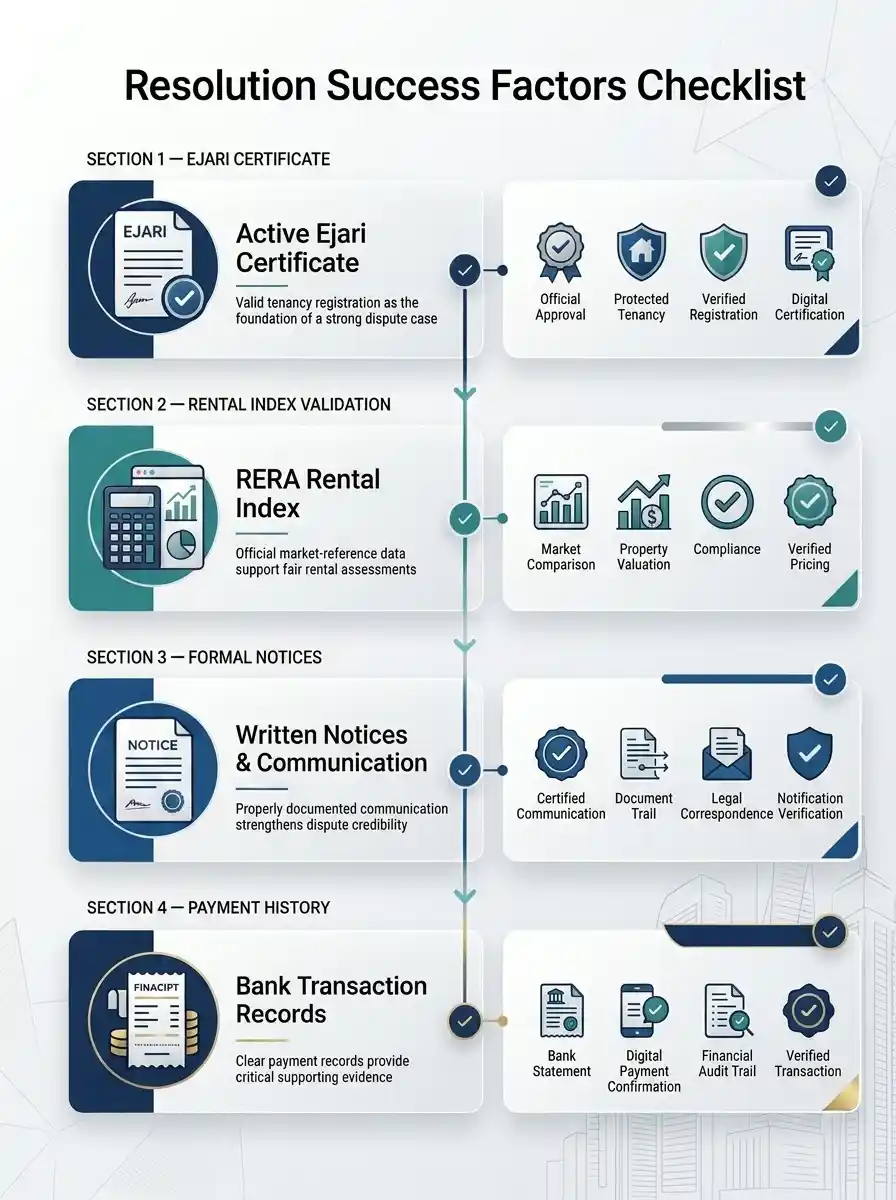
To drastically reduce the likelihood of entering into Ejari rental disputes, both tenants and landlords should ensure that all custom agreements, special riders, and maintenance clauses are properly documented and registered from day one. Clear, transparent communication before contract signing helps prevent minor misunderstandings from ballooning into legal friction later.
Keeping your Ejari updated and renewed on time also avoids complex legal complications during sudden property transfers. Utilizing professional services like Ejari Support can help ensure accurate, flawless registration, completely reducing the risk of administrative disputes.
Conclusion
Ejari rental disputes highlight the absolute importance of having legally registered tenancy contracts in Dubai. Ejari acts as a strong legal foundation that protects both tenants and landlords during conflicts, transforming complex legal showdowns into straightforward, verifiable evaluations.
By providing verified documentation directly to judicial mediators, Ejari ensures that rental disputes are resolved fairly and efficiently through official channels. Understanding Ejari rental disputes helps residents and property owners maintain smoother, more predictable, and more secure rental relationships. Contact us for a fast, hassle-free Ejari registration and professional document support.
FAQs
Can Ejari help in rental disputes in Dubai?
Yes, Ejari rental disputes are resolved directly by using registered tenancy contracts as official, binding legal proof before the authorities.
What happens if there is no Ejari available during a formal dispute?
Without a valid Ejari, proving specific tenancy terms before the Rental Dispute Settlement Center becomes incredibly difficult, which may delay resolution or lead to case rejection.
Where exactly are Ejari rental disputes handled?
They are officially handled and adjudicated by the Rental Dispute Settlement Center (RDSC) located at the Dubai Land Department.
Is an Ejari certificate required for all real estate legal cases?
Yes, Ejari serves as the primary, mandatory piece of legal evidence required to open a tenancy dispute file in Dubai.
Does Ejari protect the landlord as well as the tenant?
Yes, it offers balanced protection, securing the tenant against arbitrary rent hikes and securing the landlord’s right to enforce financial terms and eviction rules legally.