
How to Get Security Deposit Back from Landlord in Dubai
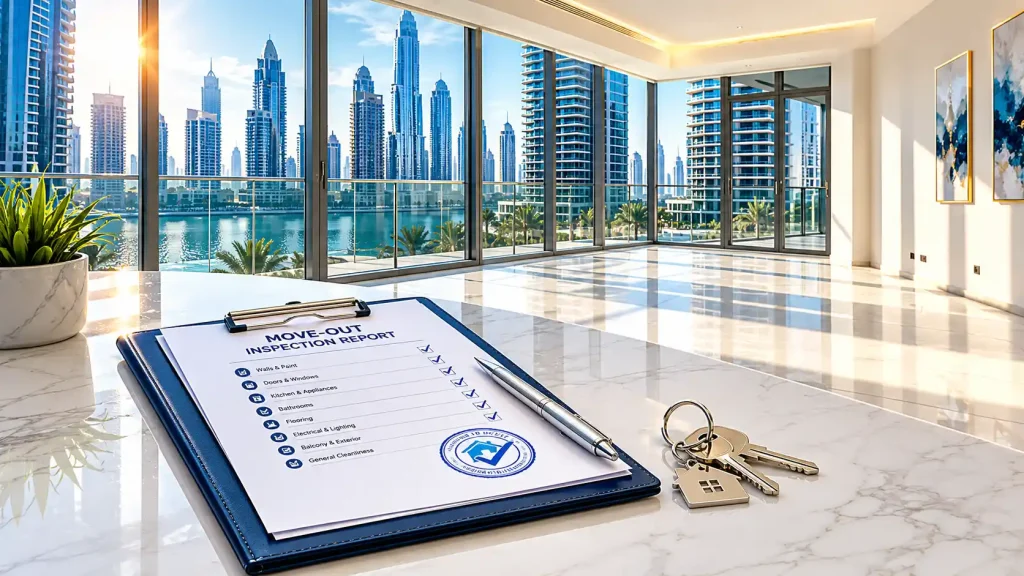
Moving between residential or commercial properties in the UAE is a process that requires a strong understanding of local real estate laws to protect your financial interests. Security deposits are one of the most misunderstood parts of renting in Dubai. Most tenants assume the deposit is automatically returned at the end of the lease, but in reality, learning how to get security deposit back from landlord in Dubai depends heavily on contract terms, property condition, landlord approval, and proper Ejari closure.
In Dubai, the standard security deposit is usually 5% of annual rent for unfurnished properties and 10% for furnished units. While this amount is refundable under regular conditions, deductions are common if the process is not handled correctly.
This guide explains the complete refund process, legal framework, common disputes, and how to protect your money using Ejari properly to ensure a full and timely return.
What is a Security Deposit in Dubai?
A security deposit is a refundable amount paid at the beginning of a tenancy agreement to protect the landlord against:
- Property damage beyond normal wear and tear.
- Unpaid utility bills or municipal housing fees.
- Early termination penalties (if applicable in contract).
- Deep cleaning or structural restoration costs.
The core rule to remember is that the deposit is not rent. It remains the tenant’s money unless valid deductions are proven by the property owner with invoices and photographic proof.
Legal Framework under Dubai Rental Law
The primary legislation governing landlord-tenant relationships is Dubai Law No. 26 of 2007 (as amended by Law No. 33 of 2008). Article 20 specifically addresses security deposits, stating that the landlord may collect a security deposit for property maintenance but must refund this deposit or the balance thereof to the tenant upon expiry of the rental contract.
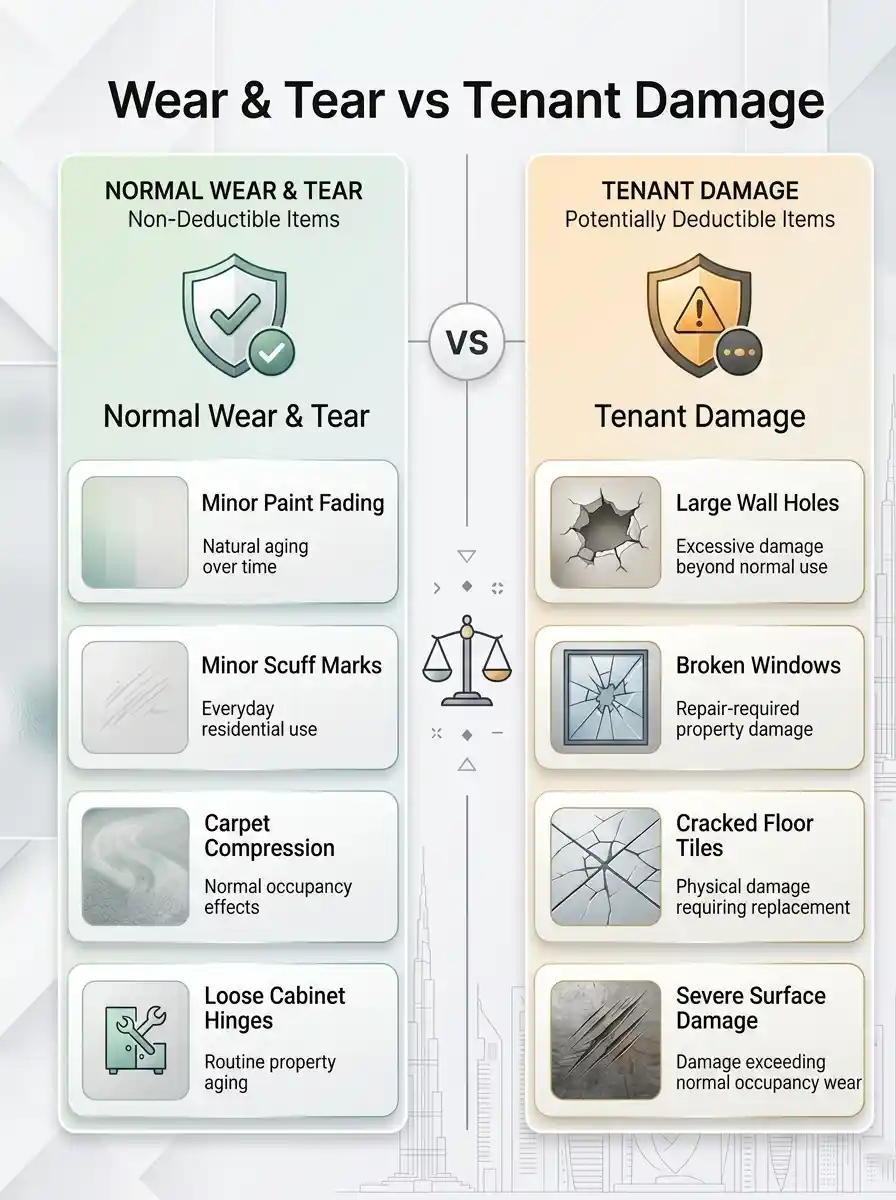
Furthermore, Article 21 notes that the tenant must surrender possession of the real property in the same condition in which it was received, except for ordinary wear and tear. This means landlords cannot arbitrarily withhold funds for minor paint fading, small carpet scuffs, or loose hinges caused by daily living.
For tenancy registration requirements and avoiding structural lease mistakes from day one, see our essential guide to Ejari Registration in Dubai.
Step-by-Step Guide on to Get Security Deposit Back from Landlord
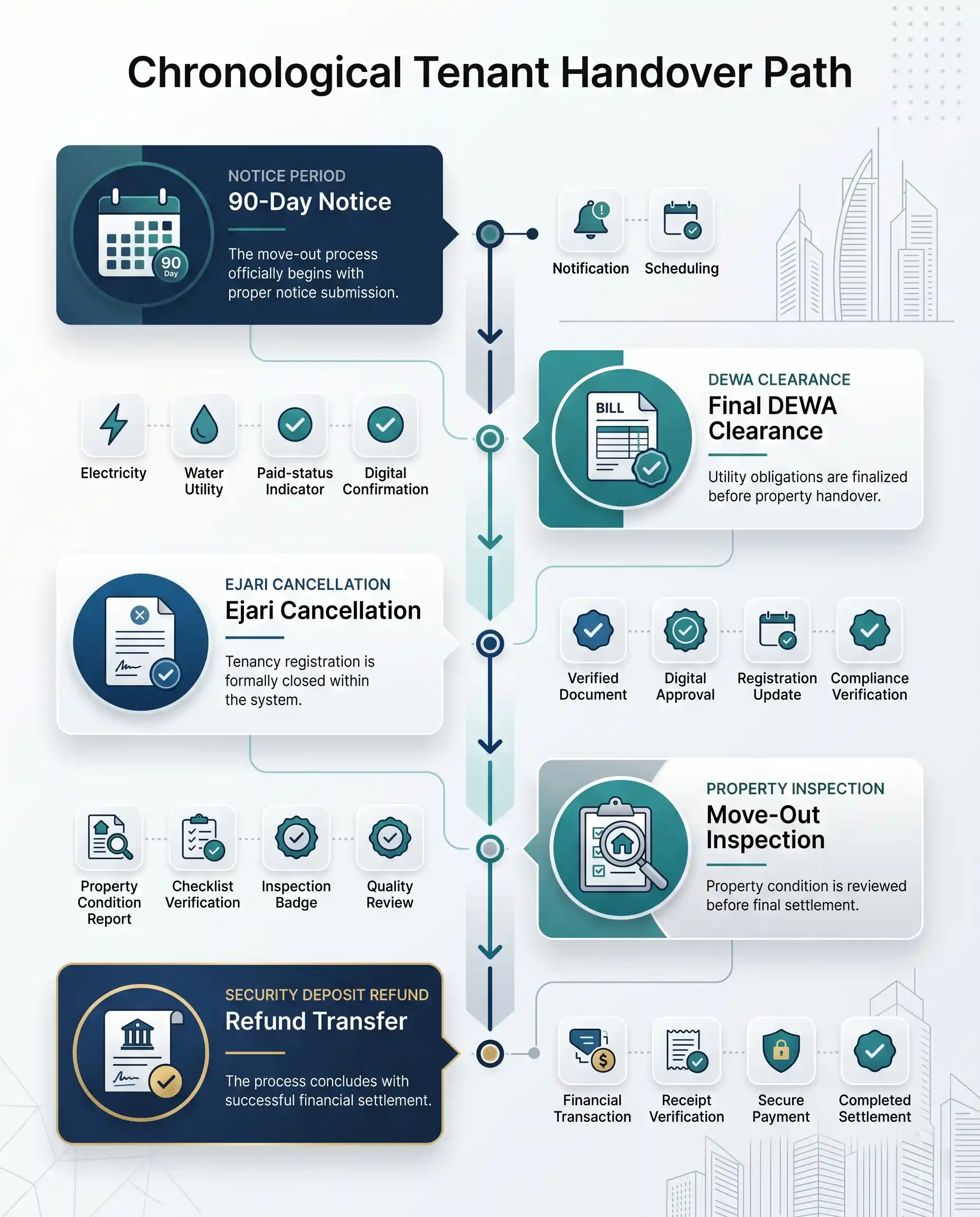
To secure your funds without friction, you must follow a highly structured administrative timeline. Missing a single step can grant the landlord leverage to delay your checkout settlement.
Step 1: Give Proper Notice
Ensure you follow your lease termination notice period (usually 90 days prior to contract expiration unless otherwise agreed in the addendum). Send this notice via email or registered mail to create an unalterable paper trail.
Step 2: Complete Ejari Cancellation
Ejari cancellation confirms the lease end officially within the government’s central system. This frees up the property’s unique plot data and signals to the authorities that the contract has concluded naturally.
Understanding Ejari Cancellation Before Recovering Your Security Deposit
When a tenancy comes to an end, completing the Ejari cancellation process is an important part of properly closing the rental agreement. Tenants should understand when and how to terminate their Ejari, what documents may be required, and how cancellation fits into the overall move-out process. Following a clear guide to canceling Ejari online in Dubai can help tenants complete the tenancy closure correctly while keeping the necessary records for their security deposit claim.
Step 3: Property Handover and Utility Disconnection
Return all physical keys, parking gate clickers, and building access cards. Clear all outstanding utility bills to obtain final clearance certificates from the Dubai Electricity and Water Authority (DEWA), your district cooling provider (Chiller), and telecom operators.
Step 4: Physical Move-Out Inspection
Schedule a joint walkthrough with the landlord or their property manager. The landlord will check the structural state of the walls, flooring, plumbing fixtures, and kitchen appliances against the original move-in report.
Step 5: Final Settlement Breakdown
The landlord must provide either your full deposit refund or a transparent, itemized deduction breakdown accompanied by official repair quotes.
Step 6: Receive Refund Transfer
The final refund is typically processed via bank transfer or a manager’s cheque within 7 to 30 days after the key handover is completed.
Common Reasons for Deposit Deductions
Understanding where potential financial losses occur allows you to mitigate risks proactively before handing back the keys.
| Reason | Description | Typical Cost Impact |
|---|---|---|
| Wall damage | Large structural holes from drilling, heavy stains, unauthorized paint colors | AED 300 – 1,500 |
| Deep cleaning | Property left excessively dirty with grease, trash, or debris accumulation | AED 200 – 800 |
| Utility bills unpaid | Outstanding balances remaining on DEWA, chiller, or internet accounts | Variable based on usage |
| Broken fixtures | Cracked mirrors, broken door handles, damaged cabinetry, or ruined appliances | AED 100 – 2,000 |
| Early exit penalty | Breaching the fixed lease duration prior to contract end date | Dependent on contract terms |
RERA Rules on Wear and Tear: How to Get Security Deposit Back from Landlord in Dubai
A major point of friction during the move-out inspection involves distinguishing between tenant damage and natural property aging. According to RERA regulations, normal wear and tear is the gradual deterioration of a property through ordinary, everyday use without negligence or abuse.
Understanding Your Rights for a Successful Refund
Landlords cannot legally charge you for faded paint from sunlight exposure, minor scuffs on corridor walls from normal foot traffic, or minor bathroom sealant degradation. Knowing these distinctions ensures you are not taken advantage of during the final settlement phase.
Practical Tips to Avoid Deposit Loss
To maximize your chances of a full return, use these proactive strategies throughout your tenancy.
1. Document Everything with Photo Evidence
On your first day moving in, take hundreds of timestamped photos and videos of every room, wall scuff, and appliance interior. Email this gallery to your landlord immediately to establish an unalterable baseline record. Do the same on your move-out day.
2. Request a Joint Pre-Inspection
Ask your landlord or property management agent to walk through the unit roughly two weeks before your exit. This allows them to point out issues they intend to claim, giving you time to resolve them independently.
3. Keep Ejari Active Until Final Settlement
Never agree to cancel your Ejari certificate until you have a signed agreement regarding your refund or a physical check in hand. An active Ejari preserves your formal legal standing as a registered tenant.
4. Repair Minor Issues Privately
Hiring an independent maintenance technician to patch small nail holes, fix leaky faucets, or replace dead lightbulbs is significantly cheaper than letting your landlord deduct premium repair fees from your deposit.
What If the Landlord Refuses to Refund Your Money?
If communication breaks down and your landlord refuses to return your funds without legitimate cause, you can take immediate legal action.
Option 1: Send a Formal Written Demand
Request a complete itemized list of deductions alongside official contractor invoices. Quote Dubai Law No. 26 of 2007 to show you understand your rights.
Option 2: Use Ejari-Based Proof
Gather your active Ejari contract, your move-in photos, and final utility clearance receipts as absolute evidence of your compliance.
Option 3: File an RDC Complaint
If the landlord remains uncooperative, escalate the matter directly to Dubai’s Rental Dispute Settlement Centre (RDSC).
Tenants ready to lodge an official financial claim can file their application online through the official portal of the Dubai Rental Disputes Center (RDC) or via the Dubai REST mobile application.
Summary of the Handover and Deposit Timeline
| Stage | Responsibility | Timeframe |
|---|---|---|
| Lease end notice | Tenant | 90 days before exit date |
| Ejari cancellation | Tenant / Landlord Agent | 1 – 3 business days |
| Move-out inspection | Landlord or Representative | 1 – 7 days after vacating |
| Settlement agreement | Both Parties | 3 – 10 days post-inspection |
| Refund bank transfer | Landlord | 7 – 30 days after key handover |
Conclusion
Securing your funds at the end of a lease is a straightforward process when you approach it systematically and follow the legal framework. Most disputes happen due to poor documentation, unrecorded pre-existing defects, or rushed handovers. Ensuring proper Ejari cancellation, clean property conditions, and clear written communication significantly increases the chances of a full refund.
If you want to save time and ensure your move-out documentation, registrations, and cancellations are handled without administrative friction, professional management services through platforms like Ejari Support can streamline your filings seamlessly.
Frequently Asked Questions (FAQs)
1. Is the security deposit always refundable?
Yes, under Dubai rental law, the deposit is fully refundable unless the landlord can prove valid financial debts, outstanding utility bills, or physical damage to the unit beyond normal wear and tear.
2. Can a landlord deduct funds for normal wear and tear?
No. Dubai regulations explicitly state that landlords cannot charge tenants for normal wear and tear, such as minor paint fading from sunlight or slight carpet wearing from daily foot traffic.
3. How long does a deposit refund typically take in Dubai?
In standard market practice, once the final move-out inspection is smooth and all utility clearance certificates are submitted, refunds are processed within 14 to 30 days.
4. Can I get my deposit back without completing the Ejari cancellation?
No. Landlords require a final Ejari cancellation certificate as proof that the lease has been formally dissolved in the government tracking network before releasing the final settlement.
5. What should I do if my landlord delays the refund or stops responding?
You should send a formal written notice detailing your demand. If there is no response within a reasonable period, you can gather your documentation and file an official case at the Rental Dispute Settlement Centre (RDSC).