
Bounced Cheque Ejari Eviction: 5 Smart Steps to Know

A bounced rent cheque stresses everyone involved. The landlord loses income, and the tenant may face a legal process they did not expect. In Dubai, the way forward is structured, and your Ejari registration sits at the center of it. This guide explains how the bounced cheque Ejari eviction process works, what evidence matters, and how to file with the Rental Dispute Settlement Centre, often called the RDC.
What Legal Protections Does an Ejari Registration Offer When Rent Cheques Bounce?
Ejari is the official record of a tenancy in Dubai. In any bounced cheque Ejari eviction dispute, that record turns a private disagreement into a documented legal matter. It protects both sides, not just the landlord.
Here is what Ejari gives you:
- Official proof of the tenancy, including the parties, property, rent amount, and contract dates
- A required document for filing a case at the RDC, since the centre expects a registered tenancy
- A clear baseline for calculating unpaid amounts against the agreed payment schedule
- Protection for tenants too, because eviction must follow a set legal process rather than happen on demand
Matters connected to the cheque itself can also arise under general cheque rules, and the Dubai rental cheque bounce laws that apply in practice mostly run through tenancy law and the RDC. Rules around cheques have changed over time, so get legal advice if a large amount is involved.
Can a Landlord Evict a Tenant Immediately After a Bounced Rental Cheque?
No. A bounced cheque does not trigger automatic eviction. Under Dubai tenancy law, a landlord may seek eviction for non-payment only after the tenant fails to pay within 30 days of a formal written demand, unless the parties agreed otherwise.
A valid tenant default eviction notice usually needs to:
- Be in writing and clearly identify the landlord, tenant, property, and tenancy
- State the unpaid amount and demand payment
- Give the tenant 30 days to pay
- Be served in a way the landlord can prove, such as through a notary public or registered mail
The 30 days are counted from the date the notice is served, not from the cheque date or the day the notice was written. A mistake in timing or proof is one of the most common reasons a bounced cheque Ejari eviction request runs into trouble.
Evidence Landlords Should Gather
Strong paperwork makes the difference between a quick decision and a delayed one in a bounced cheque Ejari eviction case.
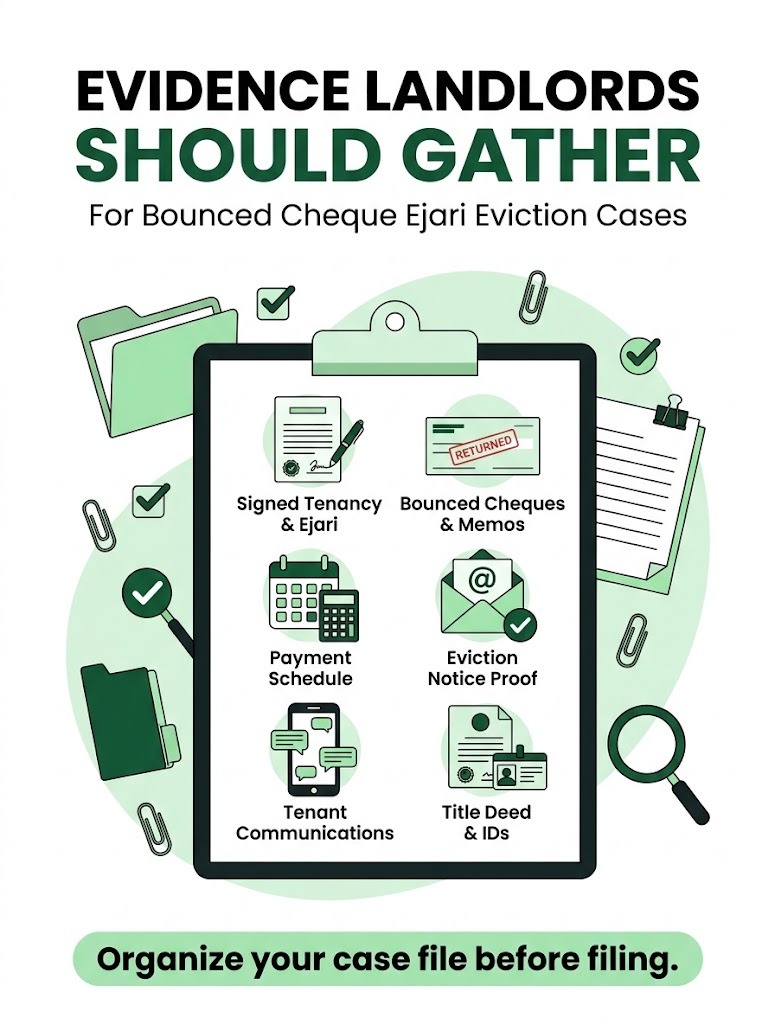
Before filing, collect:
- The signed tenancy contract and the latest Ejari certificate
- Copies of the bounced cheques and the bank return memos
- The payment schedule showing what is due
- Proof that the tenant default eviction notice was sent and received
- Messages or emails where the tenant acknowledged the debt or promised to pay
- The title deed and the passport or Emirates ID copies of the parties
Keeping this file organized also helps if the matter touches Dubai rental cheque bounce laws or if the tenant later disputes the amount.
How Does the Rental Dispute Settlement Centre Handle Unpaid Rent Claims?
The RDC is the body that handles rent disputes in Dubai, and a bounced cheque Ejari eviction claim follows a defined path. A typical RDC rent recovery claim looks like this:
- File the case through the RDC e-service, attaching the Ejari, contract, and bank cheque return memo
- Pay the filing fee, which is generally linked to the annual rent
- Attend the conciliation stage, where the centre tries to settle the matter, often within 15 days
- If there is no settlement, the case moves to a hearing, and the judge issues a decision
- If the decision favors the landlord, the tenant is ordered to pay the arrears and sometimes costs
Landlords can ask for both the unpaid rent and eviction in the same case, but each request must be supported by its own evidence. If payment still does not happen after judgment, the landlord moves to the execution stage.
Is Ejari Mandatory to File an Execution Case for Unpaid Rent in Dubai?
In practice, yes, because every bounced cheque Ejari eviction step leads back to the registered tenancy. An unpaid rent execution case follows a judgment issued by the RDC, and getting that judgment normally depends on a registered Ejari contract. Property experts note that without an Ejari, a landlord cannot properly file before the centre.
What happens at execution:
- The RDC Execution Department enforces final judgments and orders
- Where eviction is ordered, the centre schedules the eviction date
- After the tenant leaves, the landlord may need a further application to claim rent due up to the eviction date
Because an RDC rent recovery claim and its execution stage depend on documents, registering the lease before problems appear is the safest path. If a contract was never registered, it may still be possible to proceed with extra proof, but this is slower and less certain.
What Tenants Should Do If a Cheque Bounces
Tenants are not helpless in a bounced cheque Ejari eviction situation, and acting early can prevent escalation.
- Contact the landlord quickly and offer a replacement payment or a written plan
- Check that any tenant default eviction notice names the correct amount and was served properly
- Pay within the 30-day window if possible, since this can remove the ground for eviction
- Keep proof of every payment, including transfers and receipts
- Attend the conciliation stage in good faith, because many cases settle there
If the matter reaches an unpaid rent execution case, responding promptly and keeping records still matters, as it can affect costs and timelines.
Common Mistakes to Avoid
Most problems with a bounced cheque Ejari eviction case come from avoidable errors.
- Counting the 30 days from the wrong date
- Sending an informal message instead of a proper written notice
- Filing without a registered Ejari or without the bank return memo
- Ignoring the conciliation stage of an RDC rent recovery claim
- Accepting part payments with no written record of what they cover
Conclusion
A bounced rent cheque does not mean instant eviction, and it does not mean the landlord is powerless. The process runs through a written 30-day demand, an RDC filing, and, if needed, an enforcement stage. Throughout, your Ejari is the key evidence that proves who owes what. Understanding bounced cheque Ejari eviction steps early helps landlords protect income and helps tenants protect their homes. Knowing how Dubai rental cheque bounce laws and the unpaid rent execution case process fit together saves time and cost.
If you need help checking that your tenancy is properly registered or want guidance before you file a claim, the team at Ejari is ready to assist. Reach out to the team at Ejari today and make sure your Ejari evidence is in order before any dispute begins.
Frequently Asked Questions
Can a landlord charge late fees after a bounced cheque?
Only if the tenancy contract specifically allows it, so check the contract terms before adding any extra charges.
What if the tenant pays after the notice but before the case is filed?
Payment within the 30 days generally removes the non-payment ground for eviction, so keep proof of the date and amount.
How long does eviction take after the RDC issues a judgment?
The centre sets the eviction date through its execution process, and timing varies depending on the case.
Can the tenant and landlord agree on a payment plan?
Yes, and putting it in writing is wise, since an agreement reached during conciliation can settle the matter without a full hearing.
Who pays the RDC filing fees?
The party filing usually pays first, and the final decision may order the other side to cover some of the costs.