
Holiday Home to Ejari Conversion: 6 Easy Steps for Owners

Many Dubai owners start with a holiday home and later decide to switch to a steady annual tenant. The move makes sense when bookings slow down, or running costs rise. But the two rental modes follow different rules, and the order of your steps matters. A Holiday home to Ejari conversion means closing the DET permit side and opening the Ejari side. This guide shows you how to manage the short-term lease transition without delays, extra fees, or legal gaps.
How Can Property Owners Convert a Holiday Home Back to a Standard Ejari Lease?
Think of it as two separate tracks. Holiday homes are regulated by the Department of Economy and Tourism (DET), while long-term leases are registered on Ejari with the Dubai Land Department. Short stays, generally under six months, fall under DET. A Holiday home to Ejari conversion moves your unit from the first track to the second. The core steps are:
- Stop new bookings and manage any existing guests
- Settle Tourism Dirham dues and cancel the DET permit
- Sign a standard tenancy contract with the new tenant
- Complete long-term tenancy registration in Dubai through Ejari
- Set up utilities in the new tenant’s name
Do You Need to Cancel a DET Permit Before Registering a Residential Ejari?
We could not find an official rule that blocks Ejari registration while a permit is active. Still, a unit should not operate as a holiday home and a long-term rental at the same time, so cancel the permit first. This avoids conflicts, extra fees, and compliance questions. A smooth Holiday home to Ejari conversion starts here.
DET holiday permit cancellation is done through the DET Holiday Homes portal, where you select the unit and choose the cancel option. Outstanding Tourism Dirham must be fully paid before a permit can be cancelled, so complete your Tourism Dirham final settlement first. Some sources list a small fee for amending or cancelling a permit, so check the current amount on the portal.
Can Short-Term Guests Transition Into Long-Term Ejari Tenants Smoothly?
Yes, but treat it as a new tenancy. A guest stay under a holiday home permit is not a tenancy, so it does not carry over. If a guest wants to stay longer, finish the short-term lease transition first: end the booking, cancel the permit, then sign a full tenancy contract for the new term. After that, register Ejari like any other lease.
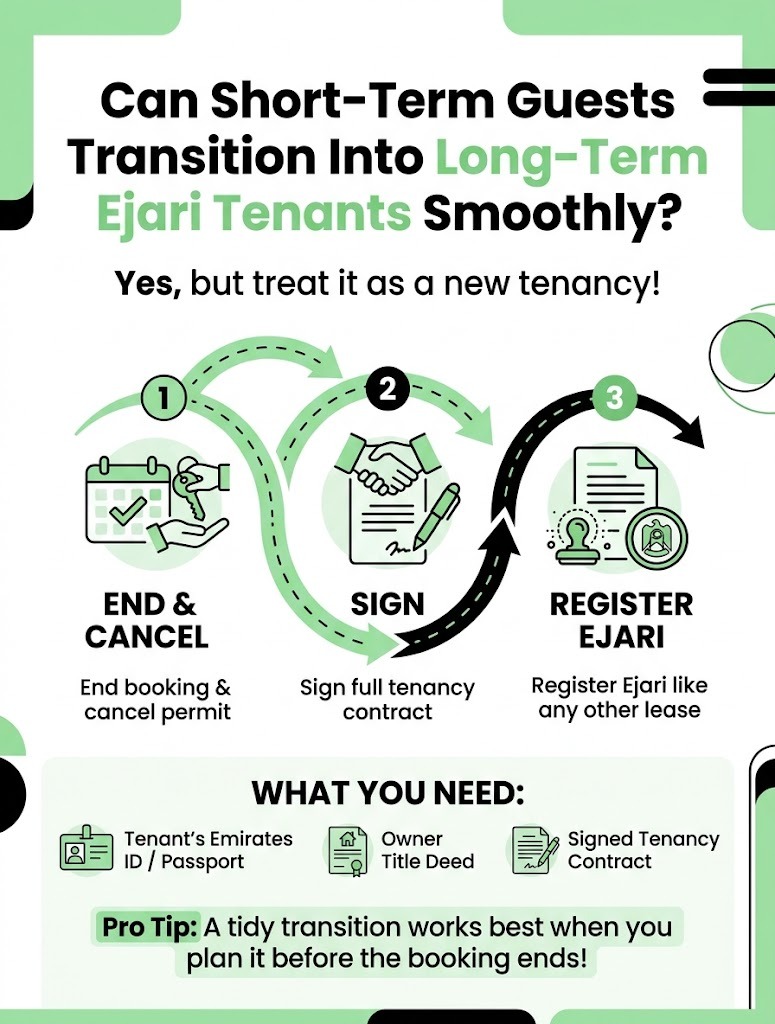
These documents are usually needed:
- The tenant’s Emirates ID or passport
- The owner title deed
- A signed tenancy contract with rent, dates, and payment terms
A tidy Holiday home to Ejari conversion with an existing guest works best when you plan it before the booking ends.
Tax and Utility Implications of Switching Rental Modes
Your costs change when you change rental mode. These are the main points:
- Tourism Dirham applies to holiday home stays, but not to a long-term lease. Complete your Tourism Dirham final settlement before you close the account.
- Sources list a municipality fee on short-term stays, which no longer applies after the switch.
- Short-term letting is generally standard-rated for 5% VAT, while a long-term residential lease is generally exempt. Confirm your own position with the Federal Tax Authority or a tax adviser.
- Holding a DET permit may change how your rental income is treated for tax. Ask a professional if you run more than one unit.
Utilities also change:
- In a holiday home, the owner usually pays for DEWA, cooling, and internet
- In a long-term lease, the tenant usually opens a DEWA account in their own name using the new Ejari number
- The owner should close or transfer the old account so no bills are left behind
Plan these costs early, because Holiday home to Ejari conversion changes who pays what.
6 Easy Steps for Your Conversion
Follow this checklist for a clean Holiday home to Ejari conversion:
- Check your building rules, title deed, and any existing bookings.
- Stop new reservations and tell upcoming guests about the change.
- Complete your Tourism Dirham final settlement on the DET system.
- Finish DET holiday permit cancellation in the portal.
- Sign the tenancy contract and complete long-term tenancy registration in Dubai on Ejari.
- Update DEWA, remove online listings, and keep all records.
Common Mistakes to Avoid
- Cancelling the permit before paying Tourism Dirham
- Leaving online listings active after the switch
- Letting a guest stay on without a signed tenancy contract
- Forgetting to close the owner DEWA account
- Assuming VAT and fees stay the same
- Registering Ejari before the permit side is closed
Most Holiday home to Ejari conversion delays come from unpaid dues or late paperwork.
Conclusion
Turning a holiday home into a long-term rental is simple when you do the steps in order. Plan the short-term lease transition early, complete DET holiday permit cancellation after you settle all dues, and finish long-term tenancy registration in Dubai on Ejari. Keep your tax and utility records tidy, and your Holiday home to Ejari conversion will run smoothly from the last guest to the first tenant.
Need help with your conversion? Contact the Ejari team today and get clear, quick guidance for your property.
Frequently Asked Questions
Can I switch back to a holiday home later?
Often yes, by applying for a new permit through DET. You will need to meet the permit conditions again and check your building rules.
What happens to upcoming guest bookings?
Honor or cancel them before you cancel the permit. Make sure all guest payments, refunds, and Tourism Dirham returns are complete.
How long does the conversion take?
There is no fixed timeline. A Holiday home to Ejari conversion depends on unpaid dues, portal processing, and how quickly you sign the new lease, so plan ahead.
Do I need building approval for a long-term tenant?
Long-term leasing is the normal use of a residential unit, but check your community rules and any move-in procedures with building management.
Who registers Ejari after the conversion?
The landlord is responsible for registration, although the tenant often pays the fee unless the contract says otherwise.