
Ejari for Electric Vehicle Charging at Home in 2026
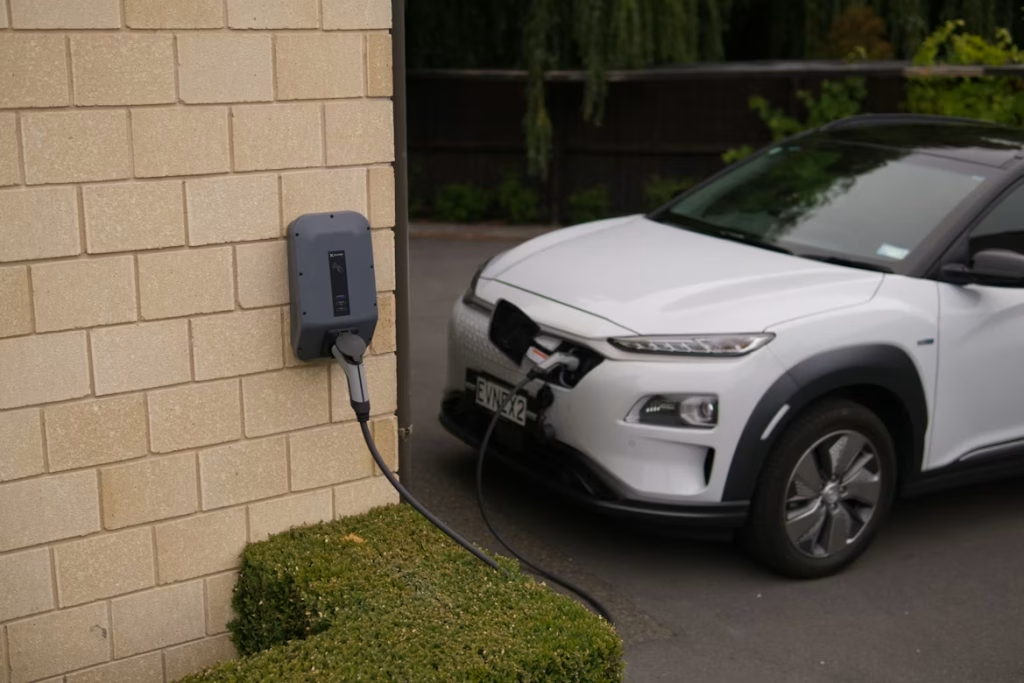
How do I add a Green Charger permit to my Ejari for home charging? In 2026, electric vehicle charging setup at home is seamlessly linked to your residency status, requiring a valid Ejari certificate to initiate the DEWA permit process.
Although there is no dedicated EV box for the Ejari, this is considered the basic proof of the EV charging tenancy to be used for obtaining a No Objection Certificate (NOC) from your landlord or building management for charging your electric vehicle at a private location, which is in turn necessary for you to take it to DEWA to get their approval for your private EV charging station.
Navigating the Setup for Electric Vehicle Charging in Rentals
The Ejari team has experienced an influx of renters looking for green mobility solutions in 2026. When installing EV charging in a rental property, the tenant, landlord, and DEWA must communicate clearly to allow for technical and legal compliance.
Essential Steps for Tenant EV Integration
- Landlord EV Consent: A formal NOC from your landlord or the building owners’ association is required before commencement of work for any installation.
- Site Assessment: A DEWA-approved electrical contractor must inspect your parking bays’ load capacity to ensure it can support EV charging without affecting the building’s grid.
- Permit Application: After that, you have your NOC and the technical specifications, now you apply for the DEWA Green Charger permit by submitting your Ejari and Emirates ID.
- Professional Installation: Only government-certified technicians are legally allowed to mount and wire an apartment EV station to prevent fire risks and insurance complications.
Who Pays for EV Charger Installation in a Rental?
A frequent query for the Ejari team is about cost sharing. Usually, it is the tenant who pays for the electric vehicle charging equipment and its installation, which can cost between 2,000 and 5,000 dirhams. But some progressive landlords are electing to swallow the expense in 2026, to boost the long-term value of their properties and draw green-minded tenants.
If you are going to be footing the bill for the apartment EV station on your own, the Ejari team suggests adding a clause in your contract about the removal or surrender of equipment at the end of your term. That way, your investment in electric vehicle charging is protected by law.
Understanding DEWA Green Charger Setup and Billing
The home DEWA green charger setup is meant to be very easy to use after you have the physical hardware. As of 2026, the billing for home charging is different from that at public stations, allowing residents to save a significant amount of money.
DEWA Billing Steps for Residents
- Account Linkage: After examining and verifying the charger, DEWA associates the energy consumption with your already Ejari-linked account.
- Slab Tariff Rates: Charging an electric vehicle at home is generally charged at a base rate for residential electricity as opposed to the higher, public commercial rates.
- Green Bill Integration: Your EV energy consumption is included as a separate line in your monthly DEWA Green Bill, and you are able to view it online.
- No Hidden Fees: Unlike public chargers, your private electric vehicle charging system is not accompanied by hourly parking fees and subscription fees.
Can a Landlord Block EV Station Setup?
From a technical point of view, a landlord can deny landlord EV consent if the infrastructure of the building is unable to safely handle the additional electrical load. However, most modern developments are now required to provide electric vehicle charging for their residents under green building regulations.
The team at Ejari suggests presenting your landlord with the technical benefits, such as how a smart station uses Dynamic Load Balancing to protect the propertys wiring. Highlighting these safety features often turns a hesitant landlord into a supporter of your electric vehicle charging needs.
Conclusion
Transitioning to electric vehicle charging at home is a cornerstone of sustainable living in Dubai. By following the correct DEWA green charger setup procedures and ensuring your Ejari documentation is in order, you can enjoy the convenience of a full tank every morning at a fraction of the cost of petrol.
The team at Ejari is here to help you navigate the No-Objection Certificate process and ensure your tenancy contracts are ready for the green revolution. We make sure your journey is legally sound and stress-free.
FAQs
Does the EV permit cost extra on my Ejari?
No, the Ejari fee remains standard, but you will pay DEWA administrative and installation fees for the DEWA green charger installation.
Can I take my charger with me when I move?
Yes, that is possible if you are with an EV charging tenancy agreement. You must return the parking bay to the state, as in your check-in report.
Is public charging more expensive?
Indeed, the use of public AC chargers is subject to higher fees, while home charging is charged at a lower rate for residential users.
Who handles the final DEWA inspection?
After your certified contractor completes the apartment EV station install, a DEWA engineer will visit for a final safety check before activation.