
Ejari Penalties: Fines for Non-Registration in Dubai

Registering a tenancy contract through Ejari is a mandatory requirement for most rental properties in Dubai. Despite its importance, some tenants and landlords delay registration or fail to complete the process altogether, often without understanding the potential consequences.
Understanding Ejari penalties is essential for anyone involved in a tenancy agreement. Non-compliance can lead to administrative complications, delays in accessing government services, and potential financial penalties. Whether you are a tenant, landlord, or property manager, knowing the rules surrounding tenancy registration can help you avoid unnecessary issues.
This guide explains the purpose of Ejari registration, the consequences of failing to register a tenancy agreement, and what tenants and property owners should know about Ejari fines in Dubai.
Why Is Ejari Registration Mandatory?
Ejari was introduced by the Dubai Land Department (DLD) to regulate the rental market and create a standardized system for tenancy registration.
The objectives of the system include:
- Protecting tenant rights
- Protecting landlord rights
- Maintaining accurate tenancy records
- Improving market transparency
- Supporting dispute resolution
- Facilitating government services
By registering tenancy agreements through Ejari, Dubai authorities can maintain a reliable database of rental contracts throughout the emirate.
For official tenancy registration requirements and regulatory updates, tenants and landlords can refer to the Dubai Land Department, the authority responsible for administering the Ejari system.
What Are Ejari Penalties?
Ejari penalties generally refer to the consequences that may arise when a tenancy agreement is not registered as required.
These consequences can include:
- Administrative fines
- Delays in government-related applications
- Difficulties accessing utility services
- Challenges during tenancy disputes
- Problems with contract verification
The specific outcome depends on the circumstances and applicable regulations at the time.
Ejari Fines in Dubai: What Tenants Should Know
One of the most frequently asked questions concerns Ejari fines in Dubai and whether financial penalties may apply when registration is delayed or ignored.
Dubai regulations emphasize the importance of maintaining properly registered tenancy records. Failure to comply with registration requirements may expose involved parties to penalties or administrative complications.
In addition to potential fines, non-registration can affect access to services linked to tenancy verification.
Examples include:
- Utility activation
- Residency-related procedures
- Sponsorship applications
- Certain licensing activities
- Property-related transactions
For this reason, timely registration remains highly recommended.
Fine for Not Registering Ejari
A fine for not registering Ejari may be imposed where tenancy registration requirements are not met according to applicable regulations.
Beyond financial considerations, unregistered tenancy agreements may create practical difficulties, such as:
- Delayed service activation
- Incomplete tenancy records
- Administrative obstacles
- Challenges proving tenancy status
Registering a tenancy agreement promptly helps avoid these complications and ensures compliance with regulatory requirements.
Ejari Late Fee: Does Delayed Registration Cause Problems?
Many tenants ask whether an Ejari late fee applies when registration is completed after moving into the property.
While requirements and enforcement may vary depending on circumstances and regulatory updates, delayed registration can create several issues:
- Postponed utility activation
- Delayed visa-related procedures
- Additional administrative requirements
- Potential compliance concerns
Rather than waiting, tenants are generally encouraged to complete registration as soon as possible after signing the tenancy contract.
The following overview highlights the most common consequences associated with delayed or missing Ejari registration.
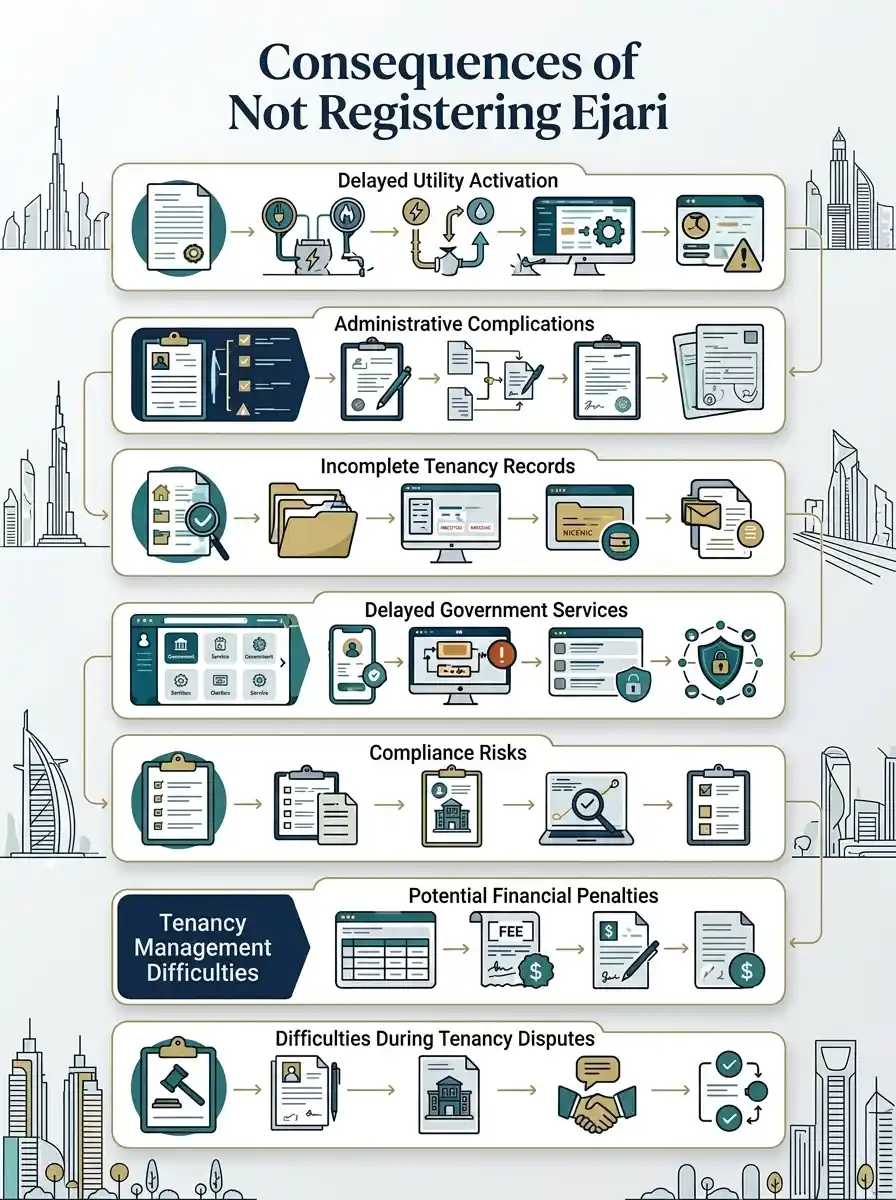
These potential consequences demonstrate why timely tenancy registration is considered an important part of renting property in Dubai.
Ejari Penalty Law and Regulatory Compliance
The Ejari penalty law framework supports Dubai’s broader efforts to maintain transparency and accountability within the rental market.
The registration requirement helps authorities:
- Monitor tenancy activity
- Maintain accurate property records
- Protect contractual rights
- Support legal dispute resolution
- Improve rental market oversight
Compliance benefits not only government authorities but also landlords and tenants who rely on accurate tenancy documentation.
Consequences Beyond Financial Penalties
Many people focus only on monetary fines, but the practical consequences of non-registration can often be more significant.
Potential issues include:
Difficulty Activating Utilities
Many utility-related procedures require tenancy verification.
In many cases, tenants may need a valid Ejari registration before proceeding with utility account activation through DEWA.
Delays in Government Services
Certain applications may require a valid tenancy registration record.
Challenges During Disputes
Official tenancy records can play an important role in resolving rental disagreements.
Problems During Lease Renewals
Future tenancy transactions may be more complicated if previous records are incomplete.
For these reasons, registration should not be viewed solely as a legal requirement but also as an important administrative safeguard.
Who Is Responsible for Ejari Registration?
Responsibility for registration depends on the tenancy arrangement.
Commonly involved parties include:
- Tenants
- Landlords
- Property management companies
- Authorized representatives
Regardless of who submits the application, ensuring that registration is completed remains an important part of tenancy compliance.
Common Reasons Why Ejari Registration Is Delayed
Delays often occur because of:
- Missing documents
- Incorrect tenancy information
- Incomplete applications
- Ownership verification issues
- Delayed submissions
- Unclear supporting records
Most of these issues can be avoided through careful preparation and document review.
How to Avoid Ejari Penalties
The best way to avoid Ejari penalties is to complete registration promptly and ensure that all information is accurate.
Helpful practices include:
- Registering immediately after signing the lease
- Preparing all required documents
- Verifying property information
- Reviewing tenancy contract details
- Maintaining copies of registration records
- Tracking renewal deadlines
These steps help minimize compliance risks and administrative complications.
Use the following compliance checklist to reduce the risk of registration delays and potential penalties.
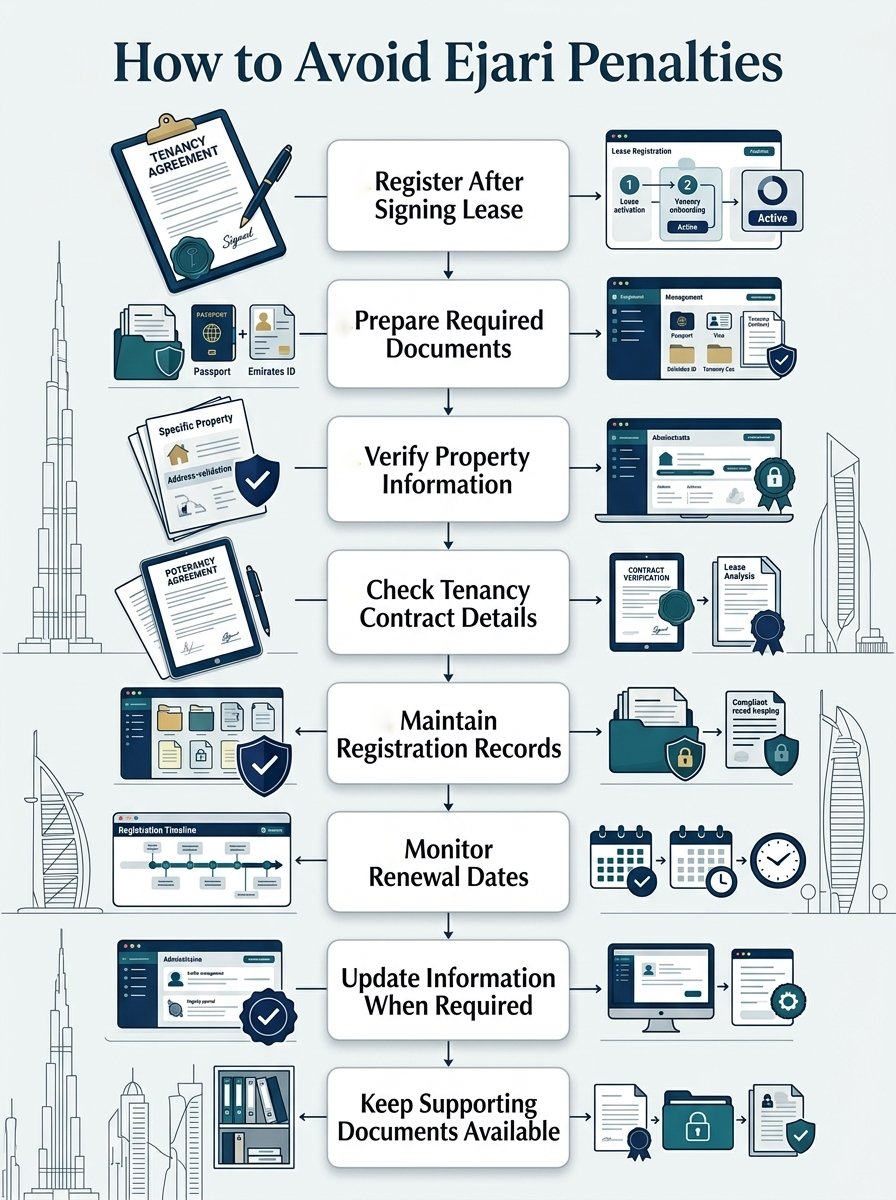
Following these simple steps can help tenants and landlords maintain accurate tenancy records and avoid unnecessary issues.
Avoiding penalties starts with understanding the complete registration process from beginning to end. If you’re unsure about the required documents, submission methods, or the overall procedure, our guide on Ejari Registration Breakdown: Essential Steps explains everything you need to know. Following the correct registration process from the outset can help tenants and landlords minimize delays, maintain compliance with Dubai’s tenancy regulations, and reduce the risk of administrative issues associated with unregistered rental contracts.
What Happens If You Discover Your Ejari Was Never Registered?
If you discover that your tenancy agreement has not been registered, it is generally advisable to address the issue as soon as possible.
Recommended actions include:
- Reviewing tenancy documentation
- Confirming registration status
- Gathering required documents
- Completing registration through approved channels
- Seeking professional assistance if necessary
Taking prompt action can help resolve issues before they affect future services or tenancy transactions.
How Ejari Support Can Help
Many tenants and landlords prefer professional assistance to ensure compliance with registration requirements.
Ejari Support assists with:
- New Ejari registration
- Ejari renewals
- Document verification
- Registration guidance
- DEWA-related support
- Tenancy administration services
Our professional services can help reduce delays and ensure tenancy records remain accurate and compliant.
Conclusion
Understanding Ejari penalties is important for every tenant and landlord in Dubai. While many people focus on Ejari fines in Dubai or the possibility of an Ejari late fee, the broader consequences of non-registration can be equally significant.
The fine for not registering Ejari is only one aspect of compliance. Delays in utility activation, administrative complications, and difficulties accessing services can all result from incomplete tenancy records. By registering promptly and maintaining accurate documentation, tenants and landlords can remain compliant with the Ejari penalty law framework while enjoying a smoother rental experience.
FAQs
What are Ejari penalties?
Ejari penalties refer to the consequences that may result from failing to register a tenancy agreement or comply with tenancy registration requirements.
Can I receive a fine for not registering Ejari?
Applicable regulations may allow penalties for non-compliance with tenancy registration requirements.
Does delayed registration create problems?
Yes. Delayed registration can affect utility activation, government services, and tenancy-related procedures.
Why is Ejari registration important?
Registration creates an official tenancy record and supports compliance, transparency, and access to various services.
How can I avoid Ejari penalties?
Register your tenancy agreement promptly, submit complete documentation, and ensure all information is accurate.