
What is Ejari? Why is it Mandatory in Dubai

If you are renting a property in Dubai, one of the first terms you will encounter is Ejari. Many new residents and first-time tenants often ask, “What is Ejari?” and why it is required before they can access various government and utility services.
Ejari is a mandatory tenancy registration system introduced by the Dubai Land Department (DLD) to regulate the rental market and create transparency between landlords and tenants. Registering a tenancy contract through Ejari helps protect both parties while ensuring compliance with Dubai’s real estate regulations.
In this guide, we’ll explain what Ejari is, how it works, why it is important, and why obtaining an Ejari certificate is often a crucial step after signing a tenancy agreement.
What Is Ejari?
To understand what Ejari is, it helps to start with the meaning behind the term itself. “Ejari” is an Arabic word that translates to “my rent.”
The system was introduced by the Dubai Land Department (DLD) to create a centralized database of tenancy contracts across the emirate. Every registered rental agreement receives a unique registration number and becomes part of Dubai’s official property records.
The primary objective of Ejari is to:
- Regulate tenancy agreements
- Improve transparency in the rental market
- Protect tenant and landlord rights
- Reduce rental disputes
- Standardize rental contract registration
- Support government service integration
Today, Ejari plays a vital role in Dubai’s real estate ecosystem.
Ejari Meaning and Purpose
The Ejari meaning extends beyond simply registering a rental contract. It serves as an official legal record that confirms the relationship between the landlord and tenant.
The system helps government authorities maintain accurate tenancy information and ensures that rental agreements comply with applicable regulations.
Some of the key purposes include:
- Establishing legal tenancy records
- Creating transparency in property leasing
- Protecting both parties involved in a contract
- Supporting dispute resolution mechanisms
- Facilitating access to public services
Without proper registration, tenancy agreements may not be recognized for certain administrative procedures.
Why Was Ejari Introduced?
Before Ejari was implemented, tenancy agreements were often handled through varying formats and record-keeping methods.
This created challenges such as:
- Inconsistent contract documentation
- Difficulty tracking rental information
- Increased risk of disputes
- Lack of centralized records
- Limited market transparency
The introduction of Ejari helped address these challenges by creating a standardized registration system for all tenancy contracts in Dubai.
Why Is Ejari Mandatory in Dubai?
One of the most common questions tenants ask is why Ejari registration is mandatory.
The answer lies in the need for a transparent and regulated rental market.
The government requires tenancy registration because it helps:
- Verify legitimate rental agreements
- Protect tenants from unauthorized practices
- Protect landlords’ legal rights
- Maintain accurate property occupancy records
- Support various government services
As a result, most residential and commercial tenancy agreements in Dubai require registration through the Ejari system.
Ejari Importance for Tenants
The Ejari importance for tenants becomes clear when accessing everyday services.
Many essential services require proof of tenancy registration before applications can be processed.
Examples include:
- DEWA account activation
- Residence visa procedures
- Family sponsorship applications
- Business licensing requirements
- Utility service registrations
- Certain banking and administrative procedures
For many residents, obtaining an Ejari certificate becomes one of the first priorities after moving into a new property.
The following overview highlights the key reasons why Ejari registration plays such an important role in Dubai’s rental ecosystem.
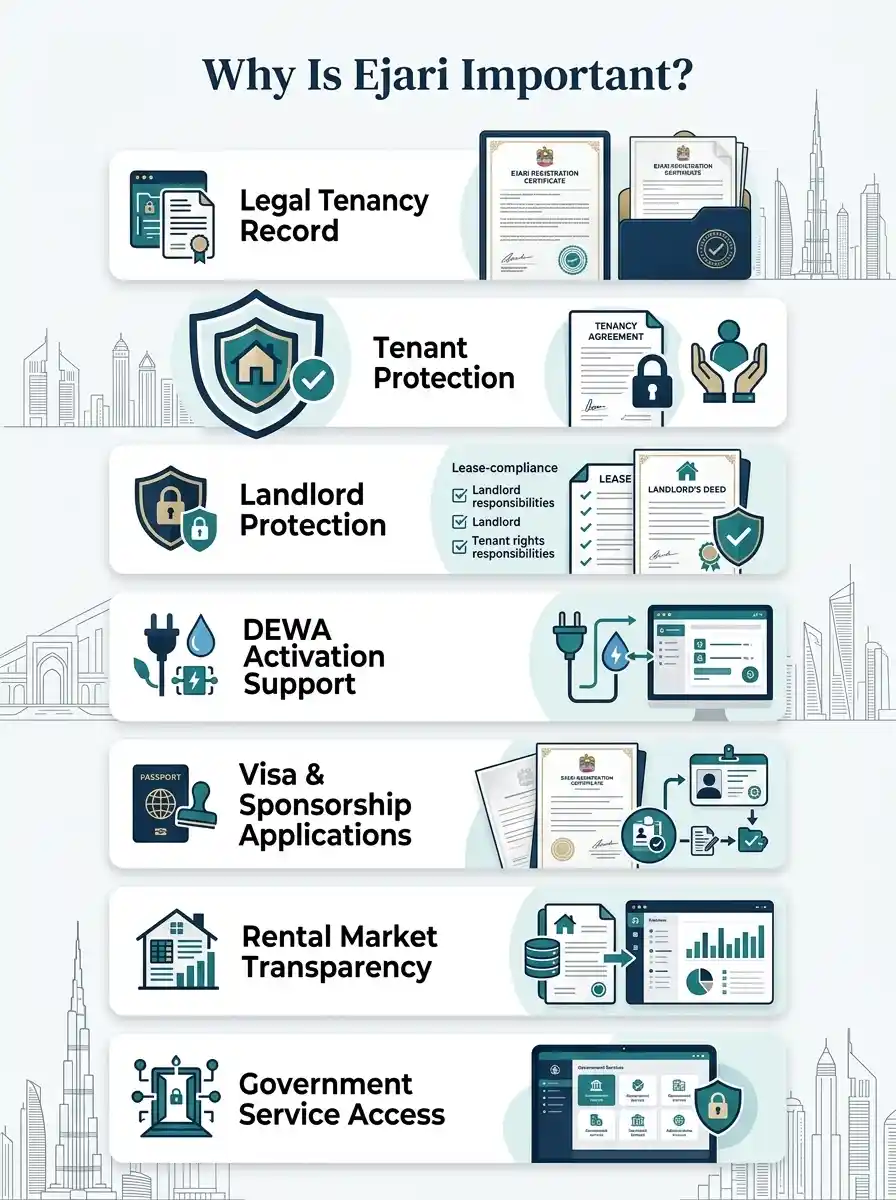
These benefits demonstrate why tenancy registration has become an essential requirement for both tenants and landlords throughout Dubai.
Who Needs an Ejari Certificate?
The need for Ejari certificate registration applies to a wide range of property occupants and owners.
This may include:
Residential Tenants
Individuals renting apartments, villas, or residential units.
Commercial Tenants
Businesses leasing offices, retail spaces, warehouses, or commercial properties.
Property Owners
Landlords who lease their properties to tenants.
Property Management Companies
Organizations managing rental properties on behalf of owners.
The registration process helps ensure that all parties involved in a tenancy arrangement have an official record of the agreement.
What Information Does Ejari Include?
When a tenancy contract is registered, the system records important details about the rental agreement.
Typical information includes:
- Tenant name
- Landlord name
- Property details
- Contract duration
- Rental amount
- Property location
- Registration reference number
Maintaining accurate records helps support transparency and compliance throughout the rental period.
How Does the Ejari Registration Process Work?
After understanding what Ejari is, many tenants want to know how registration takes place.
The process generally involves several steps.
Step 1: Prepare Required Documents
Applicants gather supporting documents related to the tenancy agreement.
Step 2: Submit Registration Application
The registration request is submitted through approved channels.
Step 3: Verification Process
Property and tenancy information is reviewed for accuracy.
Step 4: Fee Payment
Applicable registration fees are paid.
Step 5: Certificate Issuance
Upon approval, the Ejari certificate is generated and becomes available for use.
The process is designed to create an official and verifiable tenancy record.
If you’re looking for a more detailed walkthrough of the registration journey, our guide on Ejari Registration Breakdown: Essential Steps explains each stage of the process in greater detail—from preparing the required documents and submitting your application to receiving your Ejari certificate. It’s a helpful resource for first-time tenants and landlords who want a clear understanding of the complete registration process before getting started.
Common Documents Required for Ejari
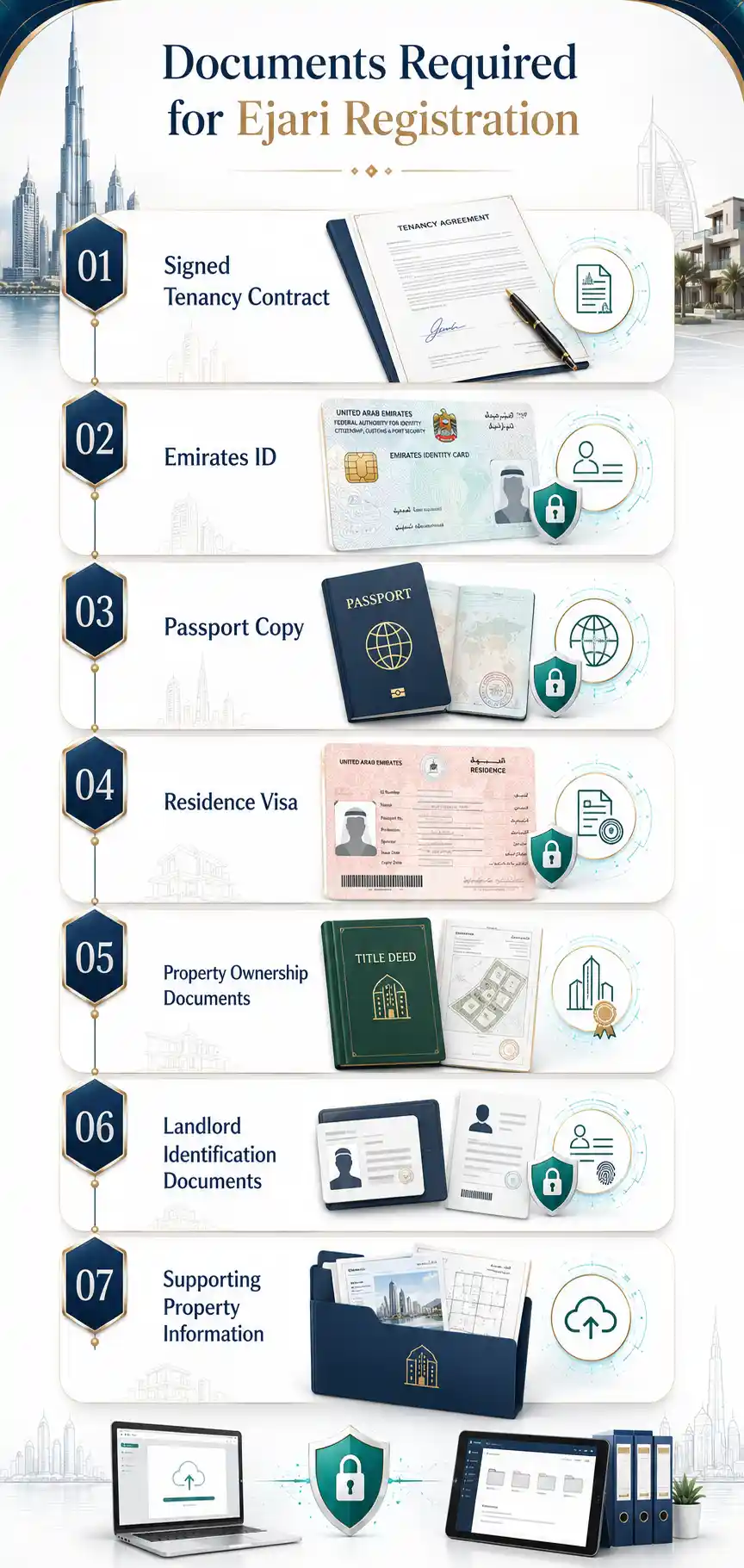
The exact requirements may vary, but commonly requested documents include:
- Signed tenancy contract
- Emirates ID
- Passport copy
- Residence visa copy
- Property ownership documents
- Landlord identification documents
Submitting complete and accurate documentation helps prevent delays.
Common Mistakes to Avoid
Applicants should avoid:
- Submitting incomplete paperwork
- Providing unclear document copies
- Entering incorrect property details
- Using expired identification documents
- Missing signatures on tenancy agreements
Careful preparation can significantly improve the registration experience.
Use the checklist below to ensure you have all the documents commonly required before starting your Ejari registration.
Preparing these documents in advance can help make the registration process faster and more efficient.
What Happens If You Don’t Register Ejari?
Failure to register a tenancy agreement can create several practical challenges.
Potential issues may include:
- Delays in DEWA activation
- Difficulties with visa-related procedures
- Administrative complications
- Challenges accessing certain government services
- Incomplete tenancy records
For this reason, registration should be completed as soon as possible after signing a tenancy contract.
How Ejari Support Can Help
Although the registration process is generally straightforward, many tenants prefer professional assistance to ensure accuracy and compliance.
Ejari Support assists with:
- New Ejari registration
- Ejari renewals
- Document verification
- DEWA-related support
- Tenancy administration guidance
Our professional support can help applicants avoid delays and ensure that tenancy records are completed correctly.
Conclusion
Understanding what is Ejari is essential for anyone renting property in Dubai. More than just a tenancy registration system, Ejari creates transparency, protects tenant and landlord rights, and supports access to important government and utility services.
The Ejari meaning reflects its role as the official record of a rental agreement, while the Ejari importance becomes evident through the many services that depend on a valid registration. Whether you are a first-time tenant or a long-term resident, obtaining an Ejari certificate is a key step in maintaining compliance and ensuring a smooth rental experience in Dubai.
FAQs
What is Ejari in Dubai?
Ejari is Dubai’s official tenancy registration system that records rental agreements and creates legally recognized tenancy records.
Is Ejari mandatory for all rental properties?
Most residential and commercial tenancy agreements in Dubai require registration through the Ejari system.
Why is an Ejari certificate important?
The certificate is often required for DEWA activation, visa procedures, and other government-related services.
Who is responsible for registering Ejari?
Depending on the tenancy arrangement, the registration may be completed by the landlord, tenant, or an authorized representative.
Can I activate DEWA without Ejari?
In many situations, a valid Ejari registration is required before utility services can be activated.